60. How to Help Highly Sensitive Children Thrive in a Noisy World
If your child feels everything more deeply than other kids, you're not doing something wrong. There's actually a name for what you're navigating: highly sensitive person.
You are standing in the kitchen making dinner when the energy in the room shifts.
You didn’t raise your voice.
You barely said anything.
But across the house, your child’s body went rigid - because something in your tone was different today than yesterday.
And they felt it before you even finished the sentence.
If this sounds familiar, you might be raising a highly sensitive child.
Not a dramatic one. Not a difficult one. A deeply perceptive, emotionally tuned-in kid who processes the world at a frequency most of us can’t even detect. And if nobody has told you yet: that is not something to fix.
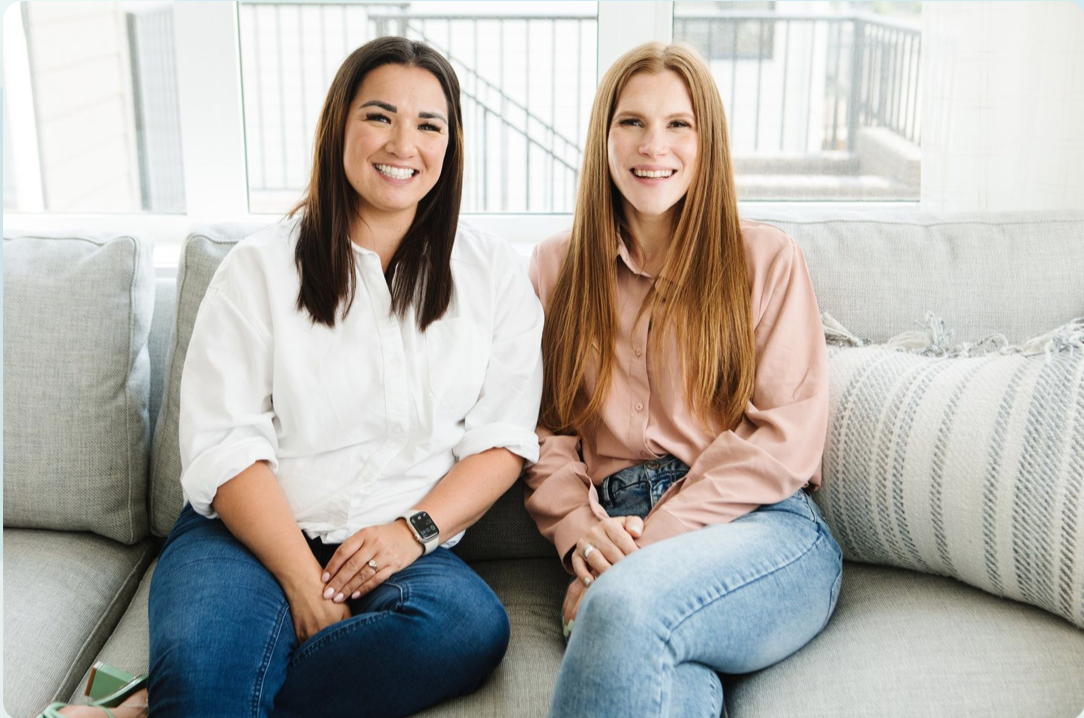
In Episode 60 of the Chill Like a Mother podcast, I sat down with Caitlin, a therapist who works with highly sensitive children and their parents at Couples to Cradles Counseling. Caitlin also happens to be raising a highly sensitive child herself - and like many of us, she started looking for answers not from a textbook, but from her own living room.
What Is a Highly Sensitive Child, Really?
The term "highly sensitive person" was coined by researcher and psychologist Elaine Aron. Her work - including her book The Highly Sensitive Child - introduced the idea that sensitivity is not a disorder or a weakness. It is a temperament. Something you are born with. Something that shapes how your entire nervous system takes in the world.
Research estimates that between 20 and 30% of the world population is highly sensitive.
It shows up across every culture, and yes, even in animals. Some dogs hang back at the dog park. Some cats startle at the smallest sound. High sensitivity is that woven into biology.
Caitlin describes what she first noticed in her son around age two or three: emotions that were visibly bigger than what other kids seemed to feel, a reluctance to be the first one into the bouncy castle, a strong reaction to loud or overwhelming environments. Her first instinct, like many parents, was to wonder if something was wrong.
"I was thinking - okay, what’s wrong with him?" she shared. "I was trying to find a solution to something I saw as a problem. And then I read Elaine Aron’s book and I realized: there is no problem. This is just who he is."
Why Some Kids Need More to Bloom (And That’s Not a Problem)
One of the most helpful ways to understand this temperament comes from pediatrician and researcher Thomas Boyce, who has a TED Talk, worth watching if you want to go deeper. Boyce describes two kinds of children: orchids and dandelions.
Dandelion children are resilient by nature. You can plant them almost anywhere and they will grow. Harsh parenting, chaotic environments, inconsistency - it does not derail them much. They adapt.
Orchid children are different. They need the right conditions to bloom. Too little warmth and they struggle. The wrong environment and the depression, the negative self-talk, the big emotions - all of it intensifies. But when an orchid child is given the right soil? They do not just survive. They are exceptional.
Boyce himself was the dandelion in his family. His sister was the orchid. Raised by the same parents, in a fairly harsh environment by today’s standards, he thrived and she struggled. That story is not about blame. It is about understanding that the same childhood can land very differently depending on the nervous system of the child living it.
Why Your Child Noticed Your Mood Before You Said a Word
Here is something that might stop you mid-scroll: your highly sensitive child can feel a shift in your energy before you have said a word.
Caitlin described it this way: if something is slightly off in the home - your tone, your body language, a tiny change in how you said something - a highly sensitive child is on it. They sense it. They watch for it. And they will call it out, sometimes before you have even registered it yourself.
"Why are you saying it like that today? You didn’t say it like that yesterday."
Sound familiar? That is not your child being difficult. That is your child processing the world at a depth most adults have been trained to tune out. Caitlin’s son once asked if she was mad - not because she raised her voice, but because of the way she closed a door.
That level of attunement can feel exhausting to parent. And it can also be recognized for what it actually is: a skill. These kids observe before they act. They read the room. They trust their gut. Those are not bugs in the system. Those are features.
The Strengths Nobody Mentions When You’re Parenting a Highly Sensitive Child
Highly sensitive children often get talked about in terms of what is hard: the meltdowns, the slow-to-warm, the tears over things that seem small. Less often do we talk about what they bring.
They are more tuned in to other people’s emotions. They are often highly creative. They tend to think deeply before acting. And perhaps most importantly, they are more attuned to their own internal experience - which is exactly what we spend years trying to teach in therapy.
Caitlin put it directly: "That inner knowing - that gut feeling your highly sensitive child already has - is going to protect them when they’re a teenager and someone offers them something they shouldn’t take. When you tell them to trust what they feel, you are building something that will carry them."
What to Do When “Name the Feeling” Makes Things Worse
Here is something a lot of parents feel but do not say out loud: they are doing everything the books tell them to do, and their highly sensitive child is still shutting down. Still rejecting the feeling-words. Still screaming "stop naming my emotions" in a voice loud enough for the neighbours to hear.
Caitlin’s son is like this. He does not want to talk about feelings directly. The gentle, reflective script — "I hear that you’re feeling frustrated" — reads as condescending to him. Her daughter? Totally different. She will walk up and say "I’m disappointed" and want to talk it through. Same house. Same parenting. Completely different kids.
So what do you do when the direct approach is off the table? Caitlin has found a few things that actually work — and they all share a common thread: they meet the child sideways rather than head-on.
6 Strategies for Highly Sensitive Children (that Actually Work from two maternal mental health specialists)
Use storytelling instead of direct emotion labeling:
If your child rejects feeling words, try narrating a story about yourself or someone else who went through something similar. Kids naturally lean into stories, and your child gets to feel the parallel without being put on the spot. Caitlin does this often with her son - telling him what happened to her at school, or what his dad did when he was seven, and weaving in the feeling without ever making it about him directly.Choose side-door moments for connection:
Car rides, walks, and play are the holy trinity for hard conversations with kids who shut down in direct exchanges. Nobody has to make eye contact. There is something else happening in the physical space. That shift alone makes it safer to talk. Caitlin’s son opened up about something upsetting at hockey on the way home from McDonald’s - not at the kitchen table with a prepared conversation.Try love notes when big emotions close the door:
Literally. When your child has slammed the door and you feel that pull to barge in and set the boundary, consider sliding a note underneath first. Kayla did this during the pandemic with her son who could not yet read - just a heart, just "I love you," just a small piece of paper that said: I am still here and I am not angry. The slamming stopped. He wrote back. They found their way through.Lean into play and playful reframing:
The book Playful Parenting by psychologist Lawrence Cohen explores this beautifully. When a child is met with play instead of correction in a charged moment, the whole temperature drops. The example Kayla shared: a therapist who, when hit with a Nerf dart from an angry child, called it a "love dart" and responded with warmth instead of boundaries. That one move changed the session. Play is how kids process. It is also how they return to safety.Let them stay in the feeling before trying to move them through it:
One of the most common mistakes well-meaning parents make - Caitlin included, she will tell you herself - is trying to accelerate regulation. Offering deep breaths before the child is ready. Suggesting the calm-down strategies before they have had a chance to actually feel the feeling. Highly sensitive children need to ride the wave before they can come down from it. Rushing that process often makes it worse.Try any kind of creative outlet to move the energy:
This does not have to be a structured art project. A piece of paper and some markers. A lump of clay. A crayon and the back of a grocery receipt. Creative expression moves emotion through the body in a way that words often cannot - especially for kids who are not wired to process verbally. (And for the record, this is a core part of the work Kayla does with mothers too.)
Your Child Is Not Being Difficult - They’re Deeply Sensitive
When I asked Caitlin what she most wants parents to hear, she did not pause.
Your child is not choosing to be dramatic.
They are not choosing to be difficult, or to hang back, or to cry at things that seem small.
Their temperament is not a behaviour problem. It is not a phase. It is not something you caused.
And that same temperament - the one that makes certain Tuesdays feel impossibly hard - also holds a lot of what the world needs more of. Creativity. Depth. Empathy. The ability to feel things and not just push them aside.
Highly sensitive children will need to learn emotional regulation. That is true. But that is also true for every child. It just tends to show up earlier and more visibly in highly sensitive kids, which means parents start working on it earlier. That is not a problem. That is preparation.
The research on orchid children is clear: the environment matters enormously. Not perfectly - you do not have to get it right every time. But when a highly sensitive child feels seen, accepted, and supported, they are not just okay. They bloom.
You Don’t Have to Fix Your Highly Sensitive Child. They Need You to Understand Them.
If you are the parent who just read this because your child might be highly sensitive and noticed the shift in your voice before you had finished making dinner, here is what I want to say: That moment does not mean you failed. It means you are raising someone who pays attention to everything. Someone who will walk into rooms one day and know exactly what is happening beneath the surface. Someone who will make a very good friend, partner, parent, or creative.

You do not need to quiet them down.
You need to learn their language.
And that is exactly what Caitlin is helping parents do at Couples to Cradles Counseling and on Instagram at @mamapsychologist.
As a registered social worker and expressive arts therapist, I work with moms who are trying to hold all of this together - their own nervous system, their child’s big feelings, and the part of themselves that got a little lost in the shuffle.
If you want to go deeper on what your body and creativity have to do with all of this, start with the free MELLOW THE MELTDOWN series in the link below.
Do you have a highly sensitive child? What’s one thing you wish someone had told you earlier? Share below - this community gets it.
For moms raising spirited, wild and/or highly sensitive children and want to coregulate and support them.
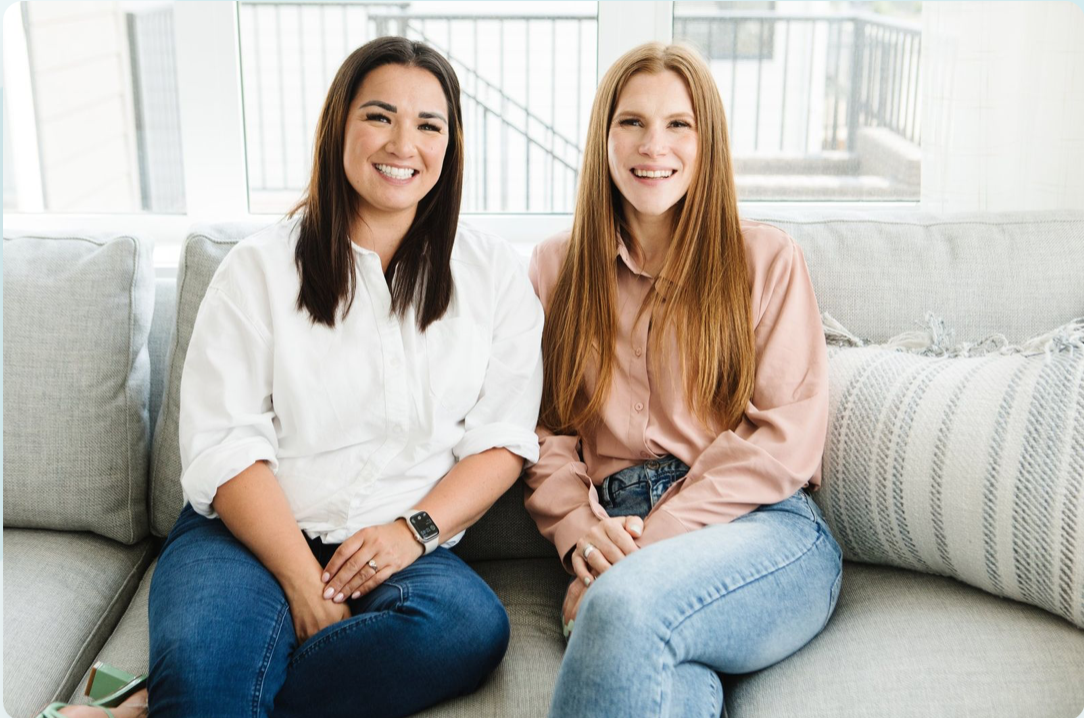
We are Chelsea & Caitlin, founders of Couples to Cradles Counselling Services and @MamaPsychologists.
We have built a community of over 636,000 parents worldwide. Currently based out of Alberta Canada, we call Southern Alberta home. In addition to @mamapsychologists, we wear many hats.
We are also best friends, registered psychologists, clinical directors, authors, and, most importantly, moms (to 4 kids aged 7 and under). We struggled significantly in the postpartum period. From months-long NICU stay to birth trauma and postpartum anxiety—we truly have experienced many of the topics we talk about! Between the two of us we have training and experience in EMDR, trauma, child and adolescent psychology, theraplay, maternal mental health, perinatal mental health, birth trauma, pregnancy loss, infertility, somatic experiencing, and more. We have over 20 years of combined experience in the mental health field.
We pride ourselves on sharing real life parenting experiences and struggles (with a dash of humour) to share the ups and downs to help parents worldwide feel less alone.
When we aren’t working in our private practices or burning the midnight oil running couples to Cradles Counselling and @mamapsychologists you will most likely find us with our families. Caitlin is often spending her time cheering her kids on at the skating rink with a coffee in hand. Chelsea can most often be found on her family farm running after her children chasing all their farm animal friends.