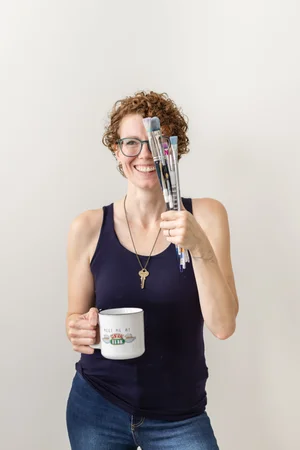
85. The One Thing You Need to Know About Breaking Intergenerational Patterns as a Mom with Danik Bernier (PART ONE)
It was 2am. Danik Bernier was in the chair, rocking her daughter, the house quiet the way only a sleeping baby makes possible.
And then it came - this surge through her body. Not the tight chest of standard sleep-deprivation dread. Something she couldn't name.
Danik is a therapist. She knows what postpartum anxiety feels like. She had it after her first baby. This wasn't that.
"It felt like I was fearing something that doesn't even exist," she told me on episode 85 of the Chill Like a Mother podcast. "Like doomsday - but I couldn't point to anything."
Here's the one thing moms need to know about breaking cycles
Some of what you feel as a mother isn't actually yours.
Not the hard parts you've earned - the tired, the overwhelmed, the particular frustration of being touched out by 4pm. That's yours. But some feelings run deeper than that. They arrive without a clear source. They don't match your actual life. They feel, if you get quiet enough to notice, old.
That's intergenerational trauma. And your body already knows how to recognize it.
When a feeling shows up, ask yourself:
Does this feel old? Older than this moment? Older than your current life?
Does it feel like you're afraid of something that doesn't quite exist in your actual situation?
Does it feel different from your "regular" anxiety or overwhelm - heavier, stranger, harder to locate?
Is there a theme in your family - something about mothers, about safety, about staying, about not being enough - that might be relevant?
Danik's great-grandmother lived through things that women in that era weren't allowed to say out loud. By the time Danik went looking - through century-old documents, through an archive she had to call in a favour to access - she found a story that explained a lot. About her family. About her grandfather. About the fear that showed up in her body at 2am while her daughter slept.
You'll want to listen to the episode for the full story. What I'll say here is this: it was a mother who kept trying to get home to her children, in every way she could, until she couldn't anymore. And something about that never fully left the family.
What Intergenerational Trauma Actually Feels Like for Moms
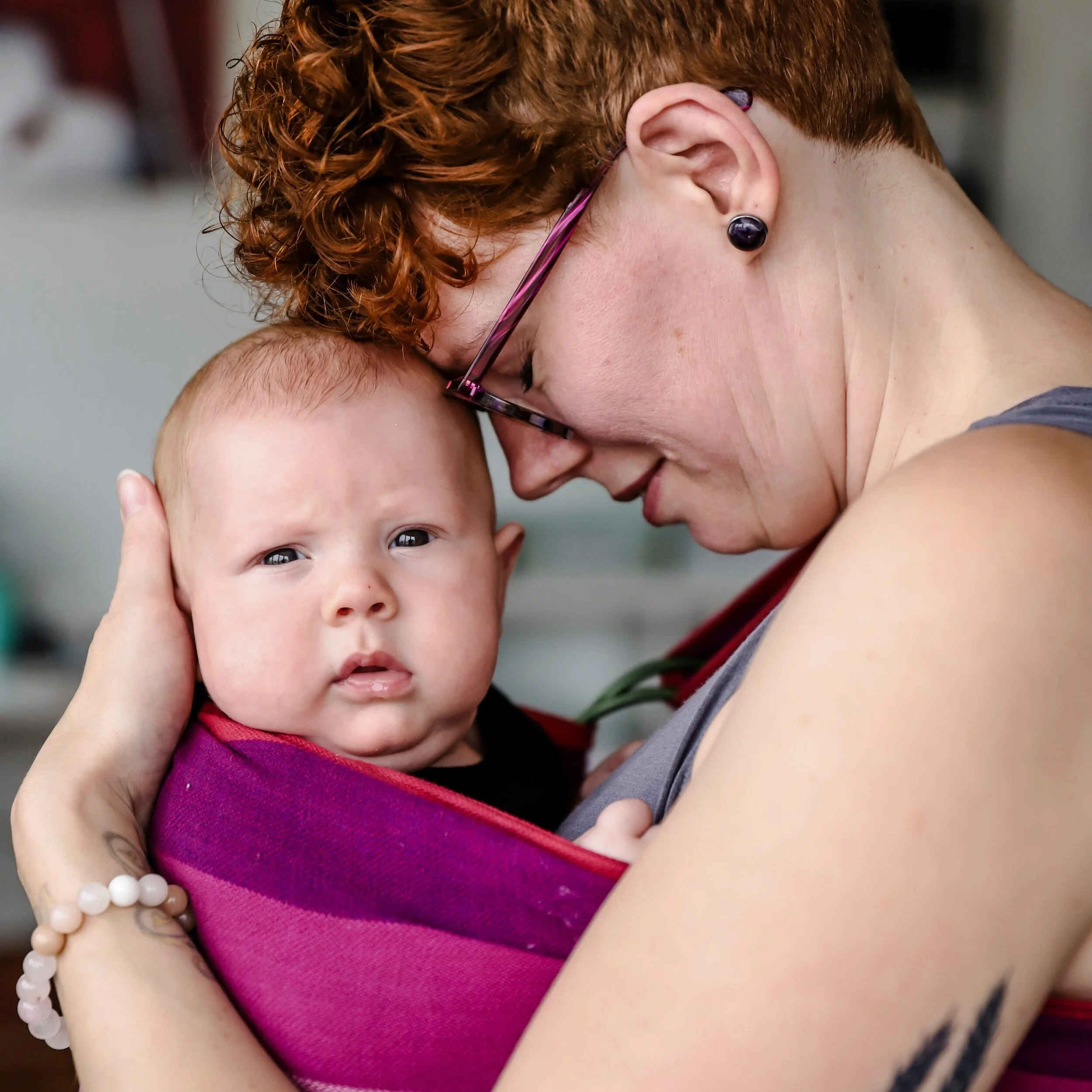
My first adult therapy appointment happened because I'd just had my first son. My therapist started asking me those quiet, curious questions - why do you think you believe that about yourself? Where might that have come from? - and I remember feeling something shift in my chest. Not a breakthrough. More like a flicker. Like I'd been walking through a room in the dark and someone handed me a tiny flashlight.
Most of us go into motherhood carrying things we don't have names for:
Fears that don't match our lives.
Reactions that come too fast, too hot, too much.
A sense of being watched, of falling short, of something always being about to go wrong.
We call it anxiety. We call it mom guilt. We call it rage. And sometimes that's exactly what it is - ours, earned through our own experiences, our own nervous systems doing their jobs.
But sometimes it's older.
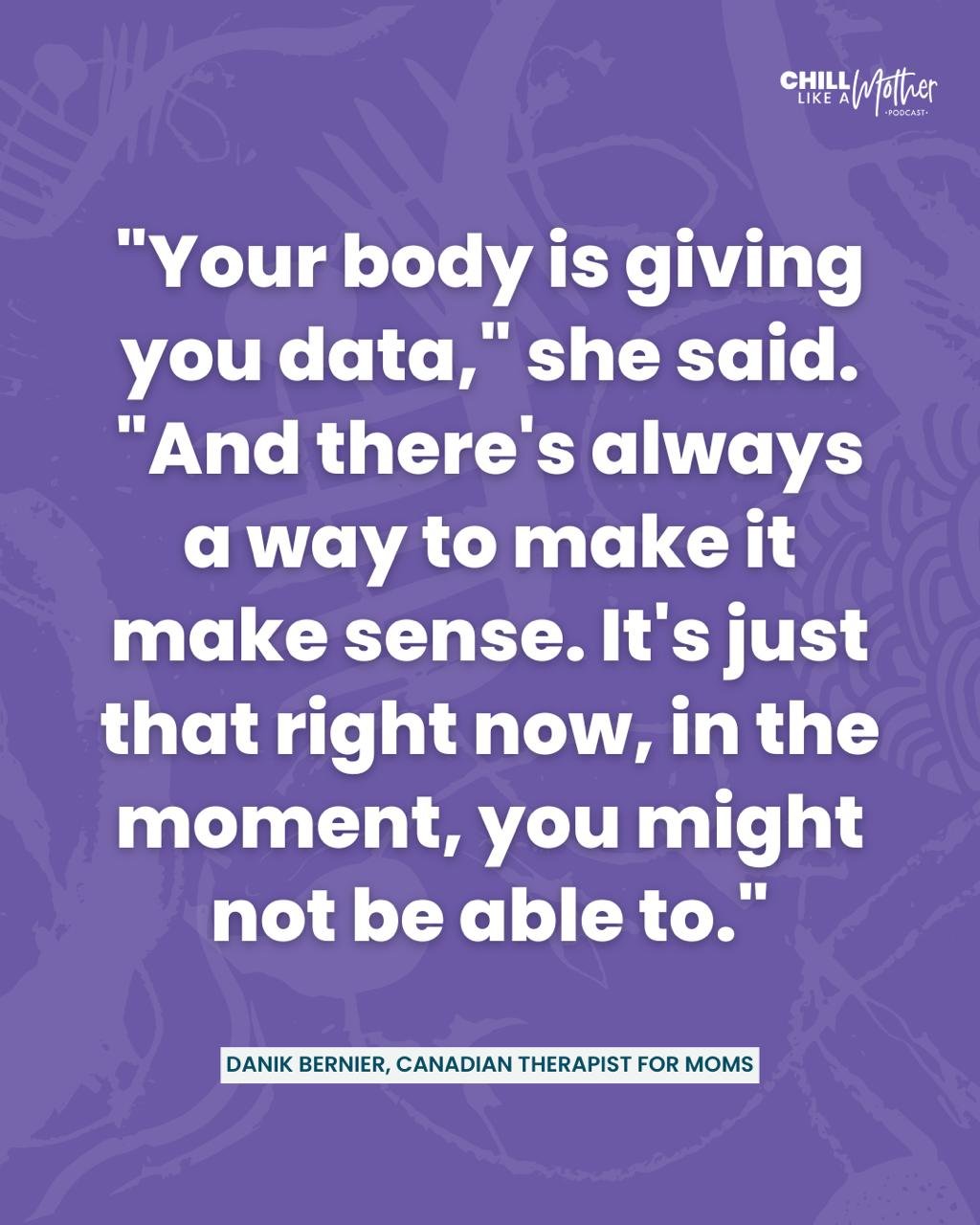
Here's how Danik describes the difference: when the body sensation feels new, like something you've experienced before and can locate, that's one thing. But when it feels ancient - when you can't put your finger on it, when the sensation doesn't quite match the situation you're in - that's the moment to pay attention.

How Generational Trauma Gets Passed Down (Without Anyone Meaning To)
Once Danik started tracing Simone's story, she could follow the thread. Simone died when her children were young. Danik's grandfather grew up without his mother, raised by a father who had been abusive. He married, had children, and the patterns continued.
Danik's own 2am surge in the rocking chair? When she finally sat with it, she understood. There is a theme in her family of mothers who don't stay.Mothers who disappear - by death. Her body was carrying that theme at 2am, even though she had no reason to believe she was going anywhere.
What It Looks Like to Start Breaking Cycles (Even Before You Have It All Figured Out)
I asked Danik about the stuck places - the moments when you know something is pulsing through you, but you don't know what to do with it. This is where so many of us live. We know something is off. We know we're reacting too fast, or shutting down when we shouldn't, or feeling things that don't match the moment. But we don't know what to do next.
And there's often this message underneath it all - from the culture, from well-meaning people, from somewhere inside ourselves - that tells us the children have to come first. That putting yourself first is selfish. That the fact that you can't regulate yourself in the moment is a failure.
Here's what I've come to believe, and what Danik and I talked about in the second half of this conversation: if kids come first, moms need to be ground zero. Not last. Not after everyone else is taken care of. Ground zero. The foundation. Which means that understanding what you're carrying - where it came from, what it's protecting you from - is not a luxury or a detour from good mothering. It's the work.
Next week, in part two with Danik, we get into the early signs of overwhelm that hide in your body, the window of threat and how to recognize your personal triggers, and practical skills that help before the heat of the moment hits. Not tools to use in crisis - tools to build into the ordinary days so the crisis is smaller when it comes.
Because here's the thing Simone's story makes clear: mothers have been trying to protect their kids from inside impossible circumstances for a very long time. We don't need to add to the weight. We need to put some of it down.
Journal Prompts for Moms Exploring Inherited Patterns
Is there a feeling in your body that seems to show up out of proportion to what's actually happening in your life right now?
What do you know - even vaguely - about how the women in your family experienced motherhood?
What's one sensation or reaction you've had as a mother that you still can't fully explain?
I'm a mom guilt therapist and this - the places where our history lives in our bodies - is some of the most important work I know. If this resonated, listen to the full episode with Danik above.
Has a feeling ever shown up in your body that you couldn't quite explain - something that felt older than your own experience? Drop a comment below. I read every one.
P.S. Part two of this conversation with Danik drops next week - we get into the practical tools for navigating what you're carrying. Subscribe so you don't miss it. And if you're in the thick of the hard feelings right now, the Good Moms Get Mad free toolkit is the best place to start. Link in the navigation.