
COPING TOOLS FOR MOM
COPING TOOLS FOR MOM
Session 1: I'm Fine (Are You REALLY?) - Let's Take Stock

We started todays session with a poem by Lyndsey Rush in her book “A Bit Much”
What You Might Discover Today
Here's what I'm hoping might shift for you:
What if the reason you feel overwhelmed isn't actually about your schedule or your inability to keep up?
What if it's about your body responding exactly as it's designed to - but to a situation no human body was ever meant to handle?
You know that automatic "fine" when someone asks how you're doing, while inside you might be drowning? That gap between what you say and what you feel? That might be your body trying to protect you while also trying to tell you something important.
Your body remembers every interrupted thought, every 3am wake-up, every moment you held it together when part of you wanted to fall apart. Sometimes, it starts speaking up - maybe through feeling anxious, or overwhelmed, or like you're one spilled juice box away from losing it completely. Sound familiar?
Your invitation today: Take an honest look at what's actually happening in your world. Not what should be happening or what it looks like everyone else has figured out. Just... what IS. Because it's hard to find your way when you can't see where you actually are.
↓ WATCH THE RECORDING OR SCROLL DOWN TO READ ↓
Check-In + Brain Dump
Before we dive deeper, make sure you have your journal handy (or notes app, or google doc ready) and when you’re ready take a moment to notice what's happening in your body.
Close your eyes and think:
When you think about looking at your overwhelm instead of pushing through it, what comes up?
Maybe relief that someone's finally asking?
Maybe fear about what you might find?
Maybe both at the same time? All of that makes complete sense.
You might feel tension somewhere in your body, or tiredness, or that buzzy feeling, or something completely different. There's no right answer.
Write the beginnings of these sentences and finish them with your very first thought:
My body feels...
I think I should...
I think I shouldn't...
I would like to...
I do not want to...
Guided Visualization: Waves of Motherhood
Sometimes our bodies speak in feelings and pictures, not just words. Instead of thinking our way through this - because honestly, how's that been working for us? - we're going to let your body show you where you are through imagery.
↓ LISTEN OR READ THIS SCRIPT ↓
If you're willing, close your eyes or soften your gaze. Take a few deep breaths.
I'm going to invite you to imagine yourself in a vast body of water. Maybe it's an ocean, maybe a lake, maybe something else entirely. This water represents everything you're carrying - all the worry, the endless tasks, the emotional weight of caring for everyone and everything.
First, just notice where you are in this water. Are you floating peacefully? Maybe you're working hard to keep your head above water? Perhaps you're being tossed around by waves, or maybe you're somewhere in between - just bobbing along. There's no right place to be.
Whatever you notice is exactly right.
Now, what does this feel like in your body?
Is the water warm or cold?
Are the waves gentle or intense?
Maybe everything feels overwhelming, or maybe some parts feel manageable.
Just notice, without needing to change anything.
As you look around, what do you see, if anything?
Maybe there are other people in the water with you.
Maybe you can spot something that could help - a life preserver, a piece of driftwood, a boat in the distance.
Or maybe you can't see anything helpful right now, and that's okay too. Sometimes we're in the thick of it and can't see the resources yet.
Here's what I want you to know: you've been in these waters longer than you might realize, and you're still here. You're still afloat. That's not nothing - that's actually pretty incredible.
Maybe as you float here, you notice you're stronger than you thought. Maybe you realize you've been swimming in impossible conditions and somehow you're still going. Or maybe nothing feels different, and that's fine too.
You don't need to swim to shore today. You don't need to get out of the water. You just need to be exactly where you are and know that you're not alone in these waves.
When you're ready, take a breath and gently open your eyes.
Creative Practice - Your Choice
Pick whatever feels most accessible to you today - based on what energy you have, what supplies are handy, or just what calls to you.
🎨 Option 1: Create Something Visual: Draw, paint, or collage your waves however they feel to you. Maybe you draw where you are in the water, or what the waves felt like, or any resources you noticed. Use whatever you have - even just a pen and paper is perfect. There's no right way to do this.
🖊️ Option 2: Write: Reflect on this prompt: "When I stayed in my spot in the waves instead of trying to fix it, I noticed..."
Remember - this isn't about making something beautiful or profound. It's about letting your body process this experience in whatever way feels right.
Take 10-15 minutes with whichever option you chose.
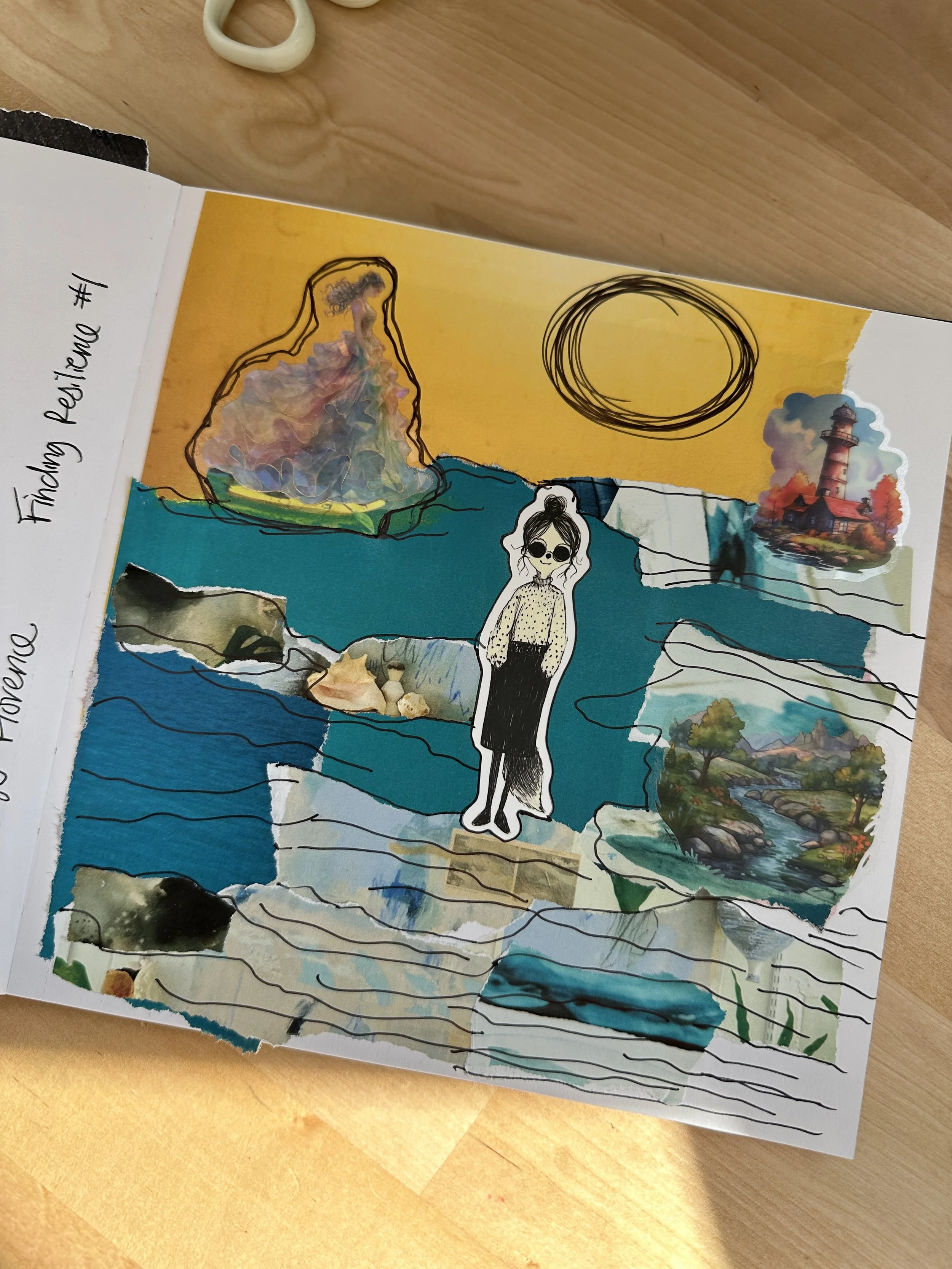
My Reflection After Creating This Page With You
I’m noticing a part of me that thinks she’s doing better than she actually is.
Her head is barely above water.
She’s looking up, towards the lights, but she’s unsure if she can reach them - what if it takes more energy to get up and out than just staying here?
As you look at this, you might notice something similar in yourself. What part of you is just keeping her head above water today?
Journal Practice: What Did You Notice?
What shifted in your body, if anything?
Maybe something shifted in your body - tension released, or breathing changed, or you felt more settled. Maybe nothing shifted and that's information too.
What surprised you about where you found yourself?
What surprised you, if anything, about where you found yourself in the water? Sometimes we discover we're in a different place than we thought, or that we've been managing more than we realized.
What You Discovered Today
Look what you did today:
You showed up.
You looked honestly at where you are instead of where you think you should be.
You stayed present with your reality without immediately trying to fix it or change it.
This is the foundation everything else builds on - not some fantasy version of your life, but the real, complicated, overwhelming, beautiful reality of what you're actually living.
What if your body isn't broken?
What if it's responding normally to circumstances that would challenge anyone?
What if you're already handling more than you even realize?
Next Week's Invitation - Session 2: "The GOOD Mom in My Head"
Next week, we're going to explore that voice in your head - you know, the one that has opinions about how you're doing as a mom? That voice might whisper or shout about all the ways you're not measuring up to some impossible standard of "good" motherhood.
What if we got curious about that voice instead of just believing everything it says?
What might happen when we stop trying to be the "perfect" mom and start being real instead?
BONUS: In Your Journal This Week
These questions are just invitations, not assignments. Take what serves you and leave the rest:
Write for a few minutes: "Something I want to remember about how my body has been feeling..."
This could be as simple as "my body is doing its best" or as specific as something you discovered about your particular waves today.
What might you tell a friend who found themselves in the same spot in the water?
How might you honor where you are this week instead of pushing through?
What's one small way you could be gentler with yourself?
Session 2: The GOOD Mom in My Head - What Happens When We Stop Trying to Be 'Good' (Ahem, Perfect)
Welcome back, or welcome if this is your first time with us. However you made it here today - whether you've been thinking about last week or you're just hoping for something that might help - you're exactly where you need to be.
So yesterday, my kid had a complete meltdown. Twenty minutes of screaming, tears, the whole production. And what was this crisis about? I gave him water in the red cup instead of the blue cup.
And you know what happened immediately in my head? That voice - you know the one - it started its commentary:
"A good mom would have remembered which cup he likes."
"A good mom wouldn't have caused this meltdown over something so preventable."
"A good mom would know how to handle this better."
Within seconds, I went from dealing with a kid's big feelings about a cup to feeling like a complete failure as a mother. Over a cup. A red cup instead of a blue one.
Does that voice sound familiar? The one that has a running commentary on your mothering? The one that somehow always knows exactly what a "good mom" would have done differently?
Today we're going to get curious about that voice. Not fight it, not try to make it go away, but understand it a little better. Because maybe, just maybe, it's not telling you the whole truth.
↓ WATCH THE RECORDING OR SCROLL DOWN TO READ ↓
Check-In + Brain Dump
Before we go any deeper, let's just notice what's happening in your body right now.
When that inner critic voice shows up - you know, the one with opinions about your mothering - what does that feel like in your body? Maybe your chest gets tight, or your shoulders tense up, or you get that sinking feeling in your stomach.
Just notice, without trying to change anything. What does it feel like when that voice starts its commentary?
Write the beginnings of these sentences and finish them with your very first thought:
When it comes to this voice…
I think I should...
I think I shouldn't...
I would like to...
I do not want to...
I feel...
I'm convinced other people will...
What I really want is…
If I had my way with this voice I would...
If I were honest with others about this voice, they would think that...
If I were really honest with myself about this, I would know that...
The best solution I can think of what it comes to this is...
And when you think about actually looking at this voice instead of just believing everything it says, what comes up?
Maybe relief that someone's finally asking?
Maybe fear about what you might find? All of that makes complete sense.
Guided Visualization: Meeting Your Inner Critic
I want to try something a little different with you today. Instead of fighting with that critical voice or trying to think positive thoughts over it, what if we got curious about it?
What if that voice is actually like a character living in your head - with its own personality, its own backstory, its own reasons for believing what it believes about what makes a "good mom"?
Sometimes when we can see something clearly, it loses some of its power over us. And sometimes when we understand where something came from, we can work with it instead of feeling like we're constantly at war with ourselves.
Your body already knows this voice intimately. Today we're going to let your creativity show you what it looks like.
Before we start, write down what you hope to learn about that critical voice in your head.
↓ LISTEN OR READ THIS SCRIPT ↓
If you're willing, get comfortable and take a few breaths with me. Or just soften your gaze if closing your eyes doesn't feel right.
Close your eyes and take some deep breaths. Notice your chest rising and falling. Keep breathing until you feel settled in your body.
Think about the last time that critical voice showed up. Remember a recent moment when it had opinions about your mothering. Let that memory come back. As you do, notice what happens in your body. Where do you feel this criticism?
Put your attention on those places in your body - maybe your chest feels tight, or your shoulders tense up, or your stomach feels heavy. Imagine what this feeling would look like if it was a picture or shape.
Now move your attention to your heart area. Take your time getting there.
When you can feel your attention resting in your heart, ask for a picture or symbol that shows you how to understand this critical voice with kindness. Something that honors both your love for your kids AND your need to be gentle with yourself.
When you see what that symbol is, gently open your eyes.
Creative Practice - Your Choice
Pick whatever feels most accessible to you today - based on what energy you have, what supplies are handy, or just what calls to you.
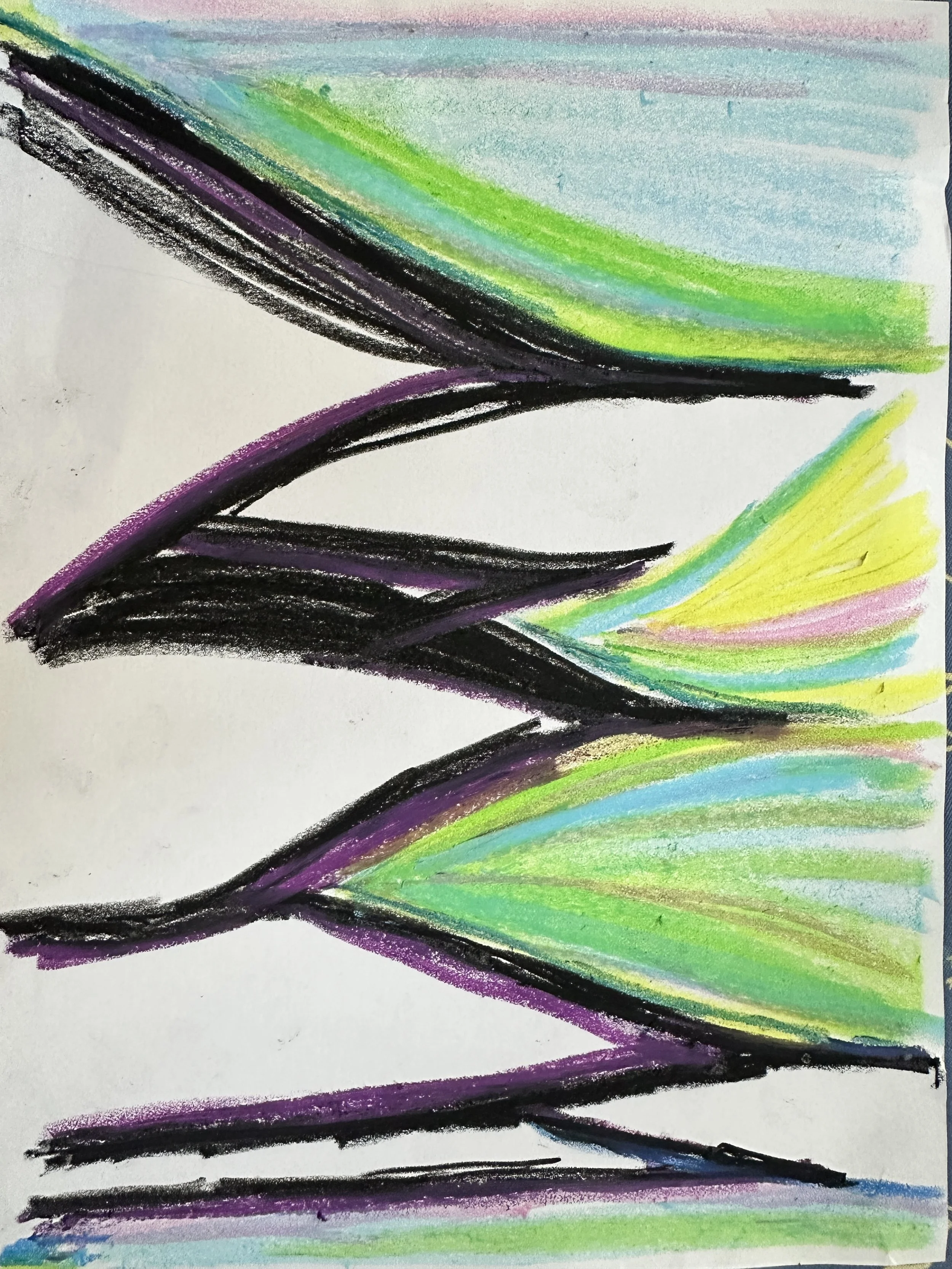
🎨 Option 1: Draw Your Experience
Use whatever materials you have to draw the two images from the meditation - how the criticism feels in your body, and the symbol of understanding from your heart. Maybe use different colors, shapes, or textures to show the difference between them. There's no right way to do this.
🖊️ Option 2: Write About What Came Up
Let yourself write about what you noticed during the meditation.
Where did you feel the criticism in your body?
What did those sensations look like as an image?
What symbol came from your heart?
What was it like to experience this voice through your body instead of just your thoughts?
Remember - this isn't about making something beautiful or getting it right. It's about processing what your body showed you about this critical voice so you can understand it better.
Take 10-12 minutes with whichever option you chose.
Journal Practice: What Did You Notice?
Take a moment to look at what you created, or think about what came up during that time.
What surprised you about where you felt the criticism in your body? Maybe you expected it in one place but found it somewhere else. Maybe you realized how much physical tension this voice creates.
What did the images show you that you hadn't noticed before? Sometimes when we see our feelings as pictures, we understand them differently than when they're just thoughts in our heads.
How did it feel to approach this critical voice through your body instead of your mind? Sometimes connecting with our physical experience helps us understand what's really happening underneath the words.
What I hear from people is how much their bodies already know about this critical voice - where it lives, what it feels like, and often what it actually needs. That voice usually isn't trying to be mean. It's worried and trying to protect something that matters deeply to you.
What You Discovered Today
Look what you did today. Instead of just fighting with that critical voice, you got curious about what it feels like in your body. You let your body show you what this criticism actually looks like and where it lives inside you.
You moved beyond just thinking about this voice and discovered what your heart center knows about approaching it with understanding and compassion.
You explored how this critical voice shows up physically, not just mentally - and maybe discovered that your body already knows how to work with it more gently.
Here's something to consider: your kids don't need you to be perfect. They need you to be real. They need someone who shows up, who loves them, who's figuring it out as they go, just like they are.
What if the mom you already are - the one who worries because she cares, the one who tries even when she's tired, the one who loves her kids enough to question whether she's doing it right - what if she's already exactly what your family needs?
Next Week: Session 3: "Touched Out & Tuned Out" - When Your Brain is Screaming for Everything to STOP
That moment when your brain is screaming for everything to just stop for five minutes. We'll get curious about what that experience is really about and explore some ways to honor those needs without guilt.
BONUS: Something to Take With You
Think about how you might interact with your inner critic differently this week. Maybe it's something kind you could say to this worried part of yourself. Maybe it's a way to acknowledge their concern while still making your own choices.
Write for a few minutes: "One thing I might say to my inner critic when it shows up this week is..."
This could be as simple as "I know you're trying to help, but I've got this" or "Thank you for caring, but I'm going to try something different." Or maybe it's just "I see you, and I understand why you're worried."
Questions to carry with you this week:
What might change if you saw your inner critic as worried rather than mean?
How might you honor your desire to be a good mom without exhausting yourself?
What's one impossible standard you might be willing to question this week?
These are just invitations, not assignments. Take what serves you and leave the rest.
Session 3: Touched Out & Tuned Out - When Your Brain is Screaming for Everything to STOP
Welcome back, or welcome if this is your first time with us. No matter how you’re feeling - fresh or exhausted - we’re glad you’re here.
So last Tuesday, I was sitting at the dinner table trying to eat.
My just-6-year-old was trying to wriggle into my lap, my older kid was asking me seventeen questions about Pokemon, and my partner was telling me about their day. Everyone needed something from me at the exact same moment, and I just wanted to eat my food while it was still warm.
And then my youngest started climbing into my lap while I had a fork halfway to my mouth. And something in my brain just... snapped. Not angry snapped, but overwhelmed snapped. Like a circuit breaker had been tripped.
I slammed my hands on the table and said - maybe a little too loudly - "Everyone needs to be quiet for 30 seconds."
The look on their faces. Like I'd announced I was moving to Mars.
But you know what? I wasn't being mean. I wasn't being a bad mom. My nervous system had hit its limit for sensory input, and it was trying to protect all of us by asking for a moment to reset.
Does this sound familiar? That moment when your brain is literally screaming for everything to just STOP? When you feel like you cannot handle one more person touching you, talking to you, or needing something from you?
Today we're going to explore what's actually happening in those moments - and why it's completely normal.
↓ WATCH THE RECORDING OR SCROLL DOWN TO READ ↓
Gentle Check-In
Before we go deeper, let's just notice what's happening in your body right now.
Think about the last time you felt "touched out" or completely overwhelmed by everyone needing something from you at once. What does that feel like in your body? Maybe buzzy and agitated, or tight and protective, or like you want to crawl out of your skin.
Just notice, without trying to change anything. How does sensory overwhelm show up for you?
Write the beginnings of these sentences and finish them with your very first thought:
When there's a lot happening around me, my body...
The sounds and sensations of a busy household make me feel...
When I need space, I usually...
My ideal environment for feeling calm would include...
Something that always helps me reset is...
And when you think about those moments when your brain is screaming for everything to stop, what comes up? Maybe guilt about needing space? Maybe fear that you're being selfish? All of that makes complete sense.
A Different Way to Look at This
I want to offer you a completely different way to think about those "touched out" moments.
What if your brain saying "STOP" isn't a personal failing or a sign that you're not cut out for motherhood? What if it's actually your nervous system doing exactly what it's designed to do - recognizing when you've reached capacity and trying to prevent overwhelm before it becomes unsafe?
Think about it: when you're overstimulated, you're more likely to snap, make mistakes, or feel completely disconnected from yourself and your family. Your nervous system knows this. So it starts sending signals: "We need space. We need quiet. We need to reset."
Your body is actually trying to keep everyone safe - including your kids. Because a regulated mother is a safer mother.
What if your need for space isn't selfish - it's your nervous system trying to keep everyone safe?
Today we're going to explore what it feels like to honor those signals instead of pushing through them.
Guided Visualization: Finding Your Sensory Limits
Before we start, write down what you hope to understand about how overwhelm shows up in your body.
↓ LISTEN OR READ THIS SCRIPT ↓
If you're willing, get comfortable and take a few breaths with me. Or soften your gaze if closing your eyes doesn't feel right.
Close your eyes and take some deep breaths. Notice your chest rising and falling. Keep breathing until you feel settled in your body.
Think about a recent time when you felt "touched out" or completely overwhelmed by everyone needing something from you. Not the worst time, just a regular overwhelming moment. Let that memory come back. As you do, notice what happens in your body right now, just thinking about it.
Put your attention on those places in your body where you feel this overwhelm. Maybe your skin feels buzzy, or your shoulders pull up tight, or your chest feels heavy. Maybe you want to pull away or make yourself smaller. Just notice where overwhelm lives in your body.
Imagine what this overwhelmed feeling would look like if it was a picture, color, or shape. Don't think about it - just let your body show you.
Now imagine you could transform (re-imagine) this sensation. Take your time getting there. Breathe into that space.
When you can feel your body slow and relax, ask what your body actually needs when it feels this overwhelmed. What would space and calm feel like in your body? Let a picture or symbol come to you that shows what your nervous system needs to feel settled.
When you see what that looks like, gently open your eyes.
Creative Practice - Your Choice
Pick whatever feels most accessible to you today - based on what energy you have, what supplies are handy, or just what calls to you.
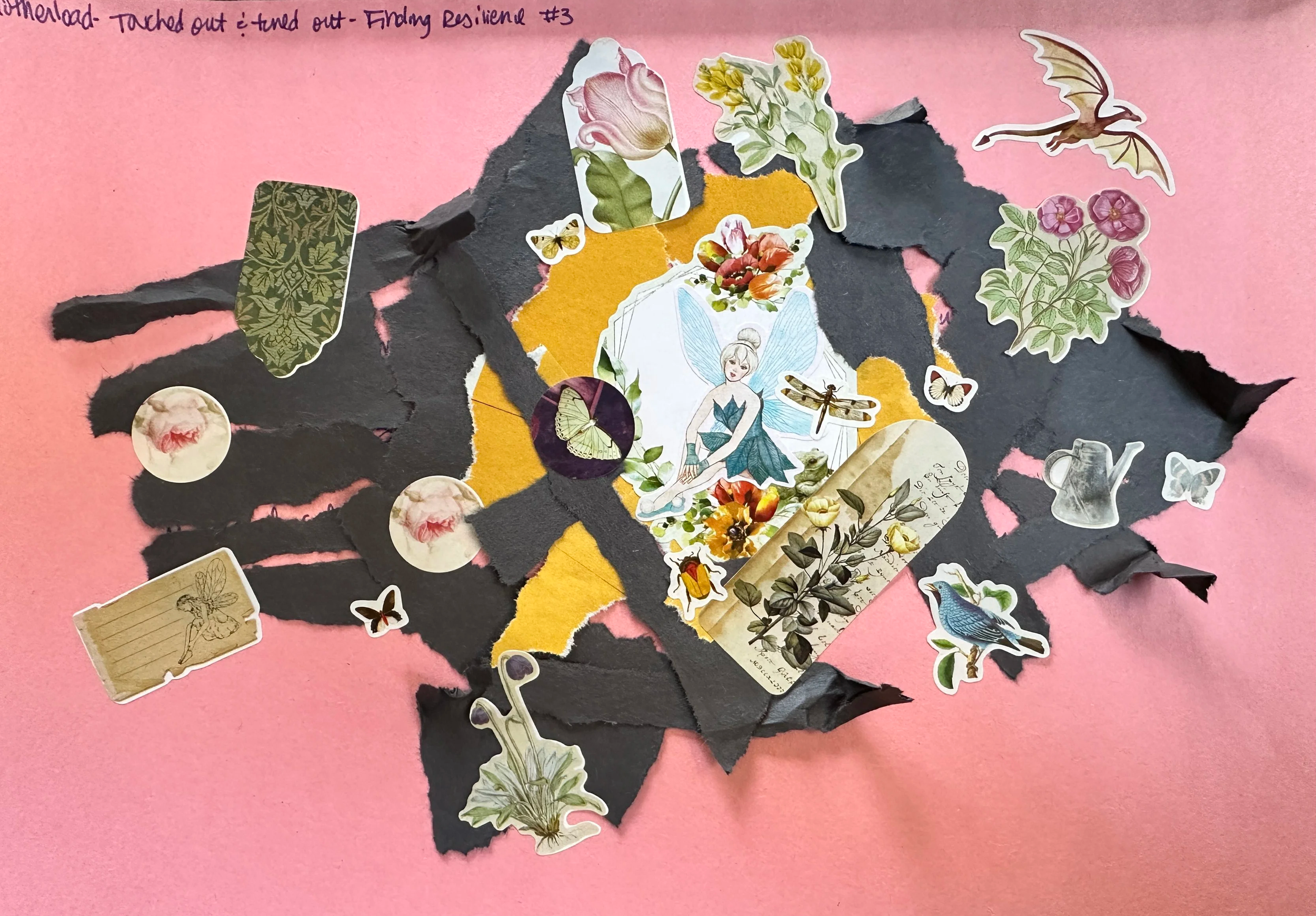
🎨 Option 1: Express Your Body's Experience
Use whatever materials you have to draw/collage/paint the two images from the meditation - how overwhelm feels in your body, and what your body needs to feel calm. Maybe use different colors, textures, or shapes to show the contrast.
🖊️ Option 2: Write About What Your Body Told You
Let yourself write about what you discovered during the meditation.
Where did you feel the overwhelm?
What did those sensations look like as images?
What symbol came for what your body needs?
How was it different to experience this through your body instead of just your thoughts?
Remember - this isn't about making something beautiful. It's about processing what your body showed you about overwhelm and your need for space.
Take 10-12 minutes with whichever option you chose.
Journal Practice: What Did You Notice?
Take a moment to look at what you created, or think about what came up for you.
What are you most curious about or most interested in?
What part of the process was most difficult, emotional, or fun for you?
What I hear from people is how much their bodies already know exactly what overwhelm feels like and what they need when it happens. Your nervous system isn't broken when it asks for space. It's working perfectly - trying to protect you and everyone around you.
What You Discovered Today
You were invited to honor your body’s signals about sensory overwhelm instead of bulldozing through them.
Maybe you actually gave yourself permission to explore what “touched out” means - not just mentally, but physically, too.
Perhaps you’ve started to see that needing space isn’t some damn character flaw; it’s your nervous system waving a big red flag, offering vital info about your limits.
You asked your body straight-up, “What do you need?” instead of crossing your fingers and hoping the overwhelm will disappear by magic.
You got curious about the difference between ignoring your physical boundaries and working with them.
And who knows - maybe your body’s been trying to tell you something important this whole damn time.
What if you didn’t get all the answers neatly packaged right away? What if you’re figuring it out in the messiness of real life? That’s not failure - that’s growth. Listening to your body means trying, screwing up, adjusting, and trying again. You might not know exactly what “touched out” feels like yet, and that’s totally fine.
This isn’t about being perfect - it’s about being curious and showing up for yourself, especially when the path is muddy and unclear. Ask yourself, “What do I need right now?”
Sometimes you’ll push through instead of resting, and guess what? That’s still part of learning.
Your nervous system is not broken. It’s schooling you on what rest and safety mean amidst the bittersweet chaos of motherhood. Sometimes you ignore your limits; sometimes you listen closer. Both are part of the messy, imperfect process.
If you’re still figuring it out, that’s more than okay. Those messy efforts help your heart grow. You’re also modeling to your kids that their feelings and limits matter - even when it’s hard as hell.
So, maybe you’re not “there” yet. But being kind to your body - even when it’s confusing - is radical self-care. And yeah, that’s absolutely worth stumbling toward.
What if being "touched out" isn’t something to push through, but a vital message from your body? What if honoring those signals isn’t selfish, but the bravest, most responsible thing you can do?
Next Week: Session 4: Who The F am I? - Searching for the Human Behind the Mom
That moment when you realize you've been so focused on everyone else's needs that you've lost track of your own identity. We'll explore what it means to be both a devoted mother AND a whole person with your own wants, dreams, and needs.
Something to Take With You
Think about how you might honor what your body showed you this week. What's one small way you could listen to those physical signals before they start screaming?
Write for a few minutes: "When I notice overwhelm starting in my body, instead of pushing through, I could try..."
Maybe it's taking three deep breaths when you feel your shoulders tense up. Maybe it's stepping outside when you notice that buzzy feeling starting. Maybe it's teaching your kids that "Mommy's body needs a quiet moment" is a normal thing to say.
Whatever your body told you it needs, trust that.
Questions to carry with you this week:
What would change if you trusted what your body tells you about your limits?
How might you teach your family that your physical needs matter too - that honoring them keeps everyone safer?
What's one early body signal you could pay attention to before you hit the wall?
These are just invitations, not assignments. Your body knows what it needs.
Session 4: WHO THE F AM I? - Searching for the Human Behind the Mom
Welcome back, or welcome if this is your first time with us. However you made it here today - whether you're feeling clear about who you are or completely lost in the shuffle - you're exactly where you need to be.
So last week, I was working with a client who's been struggling with feeling completely lost in motherhood.
She was telling me about how overwhelmed she feels, how she can't remember the last time she did something just for herself.
And I asked her a question: "Who are you when you're not being a mom?"
She just stared at me. Like I was speaking a foreign language. Then she started to tear up and said, "I... I don't know anymore. Is there anything left of me?"
That question - "Who are you when you're not being a mom?" - it stopped her in her tracks. Because she realized she'd been so focused on everyone else's needs, wants, and schedules that she'd completely lost track of her own identity. "Mom" had become the only definition she had left.
Does this resonate? That moment when you realize you've disappeared so completely into this role that you're not sure there's anything else left of you? When someone asks what you want and you draw a complete blank?
Today we're going to gently explore who you are beyond your role as a mother. Not to take anything away from how much you love your kids, but to remember that you're allowed to be a whole person too.
What I Hope You Discover Today
Maybe parts of your identity are still alive in your body, just waiting for attention
Perhaps feeling "lost" shows up physically - and your body knows what connection feels like too
Your body already knows what parts of you are hungry for expression
↓ WATCH THE RECORDING OR SCROLL DOWN TO READ ↓
First - Listen to Call of the Wild by MILCK in this playlist and write down a few of your thoughts / keywords that you heard.
(then you can move into the next section)
I want to offer you a different way to think about this whole question of "who am I?"
Identity is who you are - maybe you're creative, or love quiet mornings, or value deep conversations. Those parts of you don't disappear when you become a mom.
Authenticity is how you express that identity and whether that expression aligns with your values. You might know you're someone who loves music, but when was the last time you put on music YOU wanted to hear? You might value creativity, but are you actually creating anything, or just thinking about it?
The gap between knowing who you are and actually living it? That's what makes you feel lost.
Your kids aren't just watching how you care for them. They're watching whether you live authentically - whether you express who you really are or hide it because you think "good moms" don't do x, y, z.
What if the question isn't "Who was I before kids?" but "How can I express who I am right now - as both a mother AND someone with my own nature, values, and needs?"
Today we're going to explore what it feels like in your body when you're being authentic versus when you're just playing the role you think you should play.
Gentle Check-In
Before we go deeper, let's just notice what's happening in your body right now.
When someone asks you "What do you want?" - not what your family needs, but what YOU want - what's your first reaction? Maybe panic, or confusion, or excitement, or just a complete blank.
Write the beginnings of these sentences and finish them with your very first thought:
Six words to describe who I am today…
Six words to describe who/where do I want to be…
But this… keeps getting in my way
And this… helps me get there
And when you think about exploring who you are beyond being a mom, what comes up? Maybe excitement about reconnecting with yourself? Maybe fear that there's nothing left to find? All of that makes complete sense.
Guided Visualization: Rediscovering You
Before we start, write down what you hope to understand about where your identity lives in your body.
↓ LISTEN OR READ THIS SCRIPT ↓
If you're willing, get comfortable and take a few breaths with me. Or soften your gaze if closing your eyes doesn't feel right.
Close your eyes and take some deep breaths. Notice your chest rising and falling. Keep breathing until you feel settled in your body.
Think about what it feels like when you're completely focused on everyone else's needs. Notice where that feeling of being stretched thin or spread out lives in your body. Maybe you feel scattered, or empty, or like parts of you are missing. Just notice without judgment.
Now put your attention on different areas of your body and ask: "What part of me lives here?" Start with your hands - what do they want to create or touch? Move to your throat - what wants to be expressed? Your heart - what does it love that has nothing to do with caregiving? Your belly - what does it hunger for? Don't think about it, just notice what sensations or images come up.
Let your attention scan your whole body and notice: where do you feel most alive and vibrant right now?Maybe there's a part of you that feels energized or curious. Where does that live physically?
Now notice: where do you feel dormant or buried? What parts of your body feel sleepy or forgotten? These aren't bad - they're just waiting.
Move your attention to your heart area. Take your time getting there. When you can feel your attention resting in your heart, ask: "What part of me is most hungry for attention right now?" Let an image, color, or symbol come to you.
When you see what that looks like, gently open your eyes.
Creative Practice - Your Choice
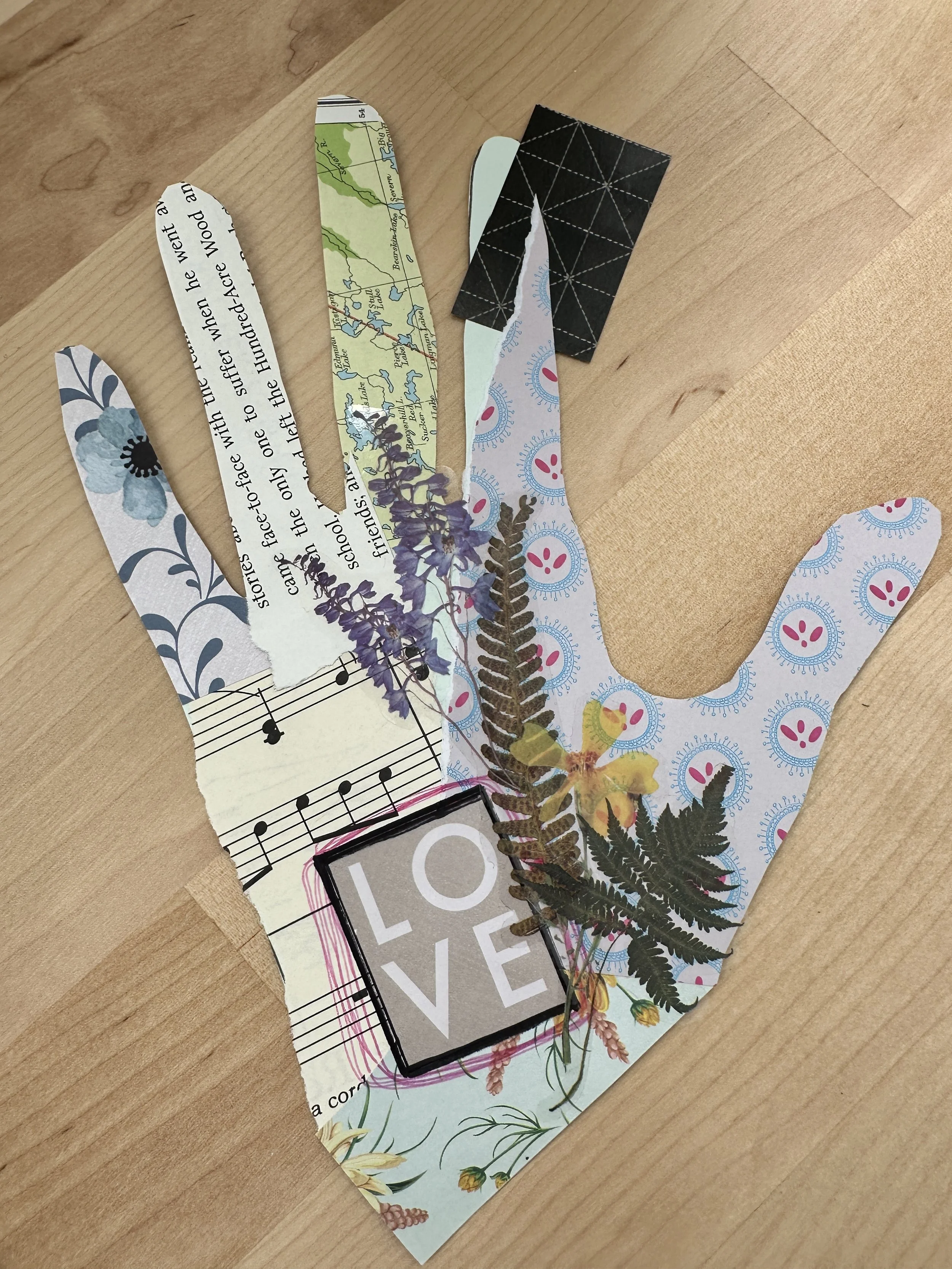
Pick whatever feels most accessible to you today - based on what energy you have, what supplies are handy, or just what calls to you.
🎨 Option One: Color Your Identity in Your Body
Use whatever materials you have to draw a map of where different parts of your identity live in your body. Maybe use different colors for vibrant vs. dormant parts. Show what your heart revealed about what's ready for attention. There's no wrong/right way to do this.
🖊️ Option 2: Write What Your Body Told You
Let yourself write about what you discovered during the body scan. Where did you feel alive? Where did you feel dormant? What did your hands, throat, heart, belly want? What symbol came from your heart about what's ready to emerge?
Remember - this isn't about being less devoted to your kids. It's about reconnecting with the full human being who loves them.
Take 12-15 minutes with whichever option you chose.
Journal Practice: What Did You Notice?
Take a moment to look at what you created, or think about what came up for you.
What surprised you most about your creative process today?
What did you learn about yourself today?
What I hear from people is how surprised they are by what their bodies reveal - how much is still alive and vibrant, just waiting for attention. Your identity isn't gone. It's just been focused elsewhere for a while.
What You Discovered Today
Look what you did today. Instead of thinking your way to your identity, you felt into where different parts of you live in your body. You discovered what being disconnected from yourself actually feels like physically, and what parts of you are still vibrant and alive.
You explored how your body holds not just tension and overwhelm, but also creativity, aliveness, and all the parts of you that want expression. You learned to ask your body directly what's ready for attention instead of trying to figure it out mentally.
Here's something to carry with you: Your kids don't just need a “good” mom. They need to see what it looks like to be a whole person living a full life. When you honor the parts of yourself that feel alive, you're teaching them that they're allowed to be complex, creative humans too.
What if reconnecting with your identity isn't about going backward to who you used to be, but feeling into who you're becoming right now in this body, in this moment?
Next Week: I Do Everything Because... - The Pressure is Real... But is it Necessary?
We'll explore how the feeling of having to do everything might show up in your body, and what happens when you ask your body directly what it actually needs to let go of some of that pressure.
Something to Take With You
Think about one small way you could honor what your body showed you about your identity this week. Something tiny that connects you to the part of yourself that feels most alive or ready for attention.
Write for a few minutes: "One small way I could honor what's alive in me this week is..."
Maybe it's using your hands to create something if they felt vibrant. Maybe it's letting your voice express something if your throat felt ready. Maybe it's following what your heart said it loves.
Trust what your body revealed to you.
Gentle questions to carry with you this week:
What would change if you paid attention to the parts of your body that feel most alive?
How might you give just a little attention to what your heart said is ready to emerge?
What's one way you could model being a whole person for your kids this week?
These are just invitations. Your body knows what parts of you are ready for more expression.
Session 5: I Do Everything Because... - The Pressure is Real... But is it Necessary?
Welcome back, or welcome if this is your first time with us. However you made it here today - whether you're feeling on top of things or completely buried under your to-do list - you're exactly where you need to be.
So yesterday morning, I was rushing around getting everyone ready, and I realized I was doing seventeen different things at once. Making breakfast, signing a permission slip, looking for someone's missing shoe, mentally planning dinner, remembering we need more milk, responding to a text from a friend, and wiping down the counter.
Meanwhile, my partner was eating breakfast and then going to get dressed. Just... those two things.
And when I felt that familiar tightness in my chest - that overwhelmed feeling - I caught myself thinking: "Well, I have to do all this. I'm the only one who remembers where things are. I'm the only one who thinks ahead. If I don't do it, it won't get done right."
But then I stopped and asked myself: Is that actually true? Or have I just become so used to carrying everything that I've forgotten how to put things down?
Does this sound familiar? That feeling of being the default for everything - the one who remembers, organizes, anticipates, and handles all the invisible work that keeps your family running? The mental weight of being responsible for everyone and everything?
Today we're going to explore what that pressure feels like in your body, and what happens when you ask yourself: What if I don't actually have to do everything?
What I Hope You Discover Today
Maybe the weight of "doing everything" shows up in specific places in your body
Perhaps some of the pressure you carry isn't actually necessary - just familiar
Your body knows the difference between what you choose to do and what you feel trapped doing
↓ WATCH THE RECORDING OR SCROLL DOWN TO READ ↓
Gentle Check-In
Before we go deeper, let's just notice what's happening in your body right now.
Think about your endless mental to-do list - all the things you're managing, remembering, anticipating. What does carrying all of that feel like in your body? Maybe heavy, or tight, or like you're bracing against something.
Write the beginnings of these sentences and finish them with your very first thought:
When I think about everything I'm responsible for, I feel...
The weight of being the 'default parent' ...
When I imagine having a break...
And when you think about questioning whether you really need to do everything yourself, what comes up? Maybe relief? Maybe panic about things falling apart? All of that makes complete sense.
A Different Way to Look at This
I want to offer you a completely different way to think about this pressure you're carrying.
What if the reason you do everything isn't because you're naturally better at it, but because you've been conditioned to believe that caring means controlling? That love means anticipating every need before anyone even asks?
Here's what happens: You start doing more because you care. Then you get good at it because you're doing it all the time. Then everyone relies on you because you're good at it. Then you feel like you can't stop because everyone needs you to keep doing it.
But what if some of the things you're doing aren't actually necessary? What if some of the standards you're maintaining are yours, not requirements? What if some of the anticipating and managing you're doing is preventing other people from stepping up?
Your body is carrying not just the physical tasks, but the mental and emotional weight of being responsible for everyone else's comfort and happiness.
What if YOU doing everything isn't actually serving you or your family?
What if it's just exhausting you and preventing others from becoming more capable?
Today we're going to explore what it feels like to carry everything versus what it might feel like to put some things down.
Guided Visualization: Mental Load
Before we start, write down what you hope to understand about where this pressure lives in your body.
↓ LISTEN OR READ THIS SCRIPT ↓
If you're willing, get comfortable and take a few breaths with me. Or soften your gaze if closing your eyes doesn't feel right.
Close your eyes and take some deep breaths. Notice your chest rising and falling. Keep breathing until you feel settled in your body.
Think about everything you're currently managing - not just the visible tasks, but the mental load. The remembering, the planning, the anticipating, the worrying about everyone else's needs. Feel what it's like to carry all of that.
Notice where this weight lives in your body. Maybe your shoulders feel heavy or pulled up tight. Maybe your chest feels compressed. Maybe your back aches with the load. Maybe your head feels full or buzzy. Just notice where you're holding all of this responsibility.
Now imagine this weight as something physical you're carrying. What does it look like? A heavy backpack? A pile of rocks? A mountain on your shoulders? Let your body show you what this burden looks like.
Here's the important part: Ask your body - what would it feel like to put some of this weight down? Not all of it, just some. Notice if there's fear about letting go. Notice if there's relief. Both can be true at the same time.
Now move your attention to your heart area. Take your time getting there. When you can feel your attention resting in your heart, ask: "What do I actually choose to carry because I love it, and what am I carrying out of habit or fear?" Let whatever images or feelings come up.
Finally, ask your heart: "What's one thing I could put down that would create more space for what I actually want to be doing?" Don't think about it, just notice what comes up.
When you have your answer, gently open your eyes.
Creative Practice - Your Choice
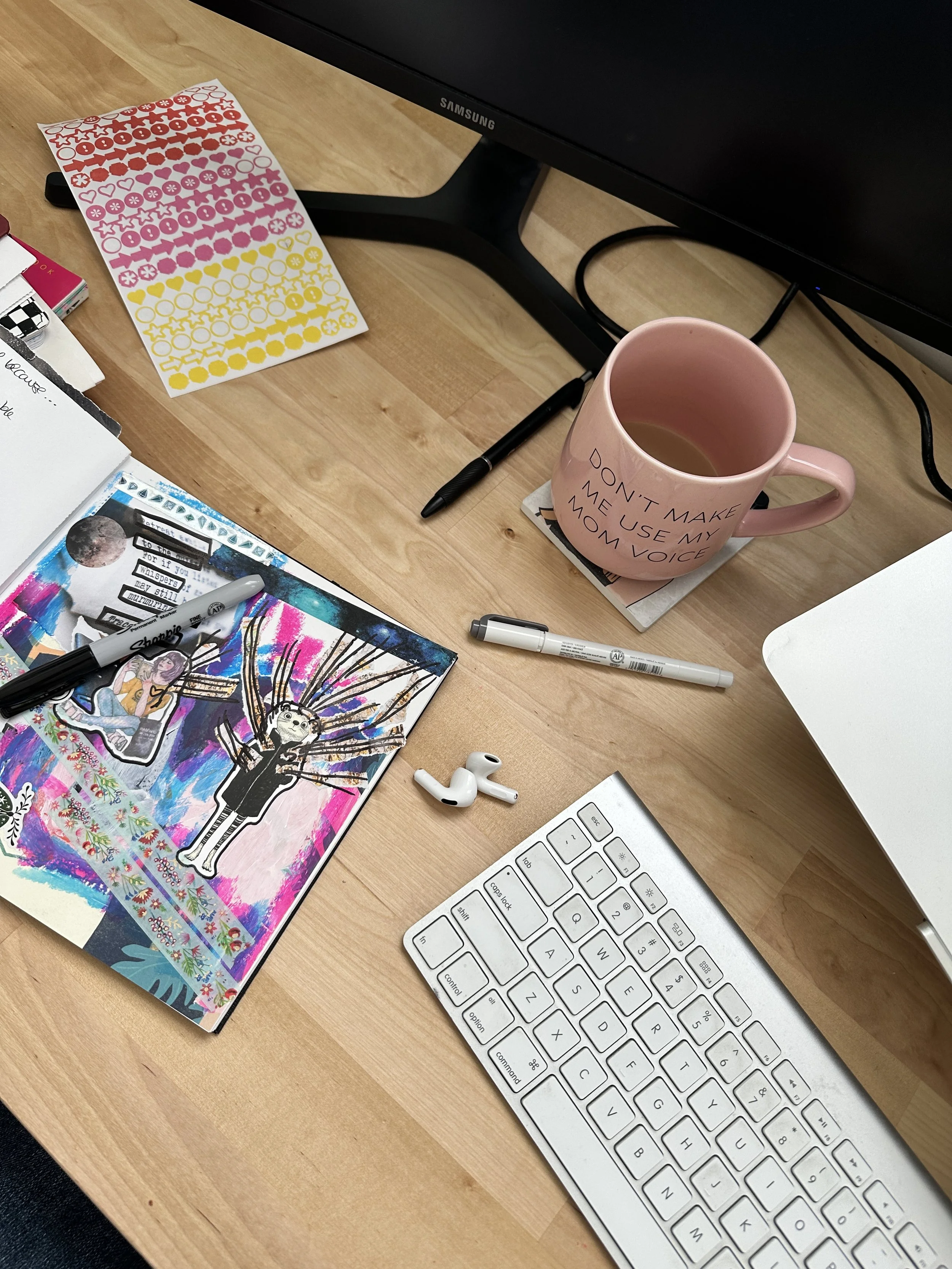
retreat awhile | to the quiet | whispers | murmuring magic | trace the path
Pick whatever feels most accessible to you today - based on what energy you have, what supplies are handy, or just what calls to you.
🎨 Option One: Draw Your Mental Load
Use whatever materials you have to draw what carrying everything feels like, and what it might look like to put some things down. Maybe show the weight you're carrying versus what you'd choose to keep. Maybe draw what space looks like when it's not filled with everyone else's needs.
🖊️ Option Two: Write About What You're Carrying
Let yourself write about what came up during the meditation.
What does the weight feel like?
What are you carrying out of love versus habit?
What would you choose to put down?
What scares you about letting go?
What excites you?
Take 12-15 minutes with whichever option you chose.
Journal Practice: What Did You Notice?
Take a moment to look at what you created, or think about what came up for you.
What are you noticing right now in your body as you look at your image, or as you read your words?
What are you most drawn to in your writing, or in your image?
What I hear from people is how surprised they are by how much weight they're carrying that they didn't consciously choose to pick up. Your body knows the difference between what you want to do and what you feel you have to do.
What You Discovered Today
Look what you did today. Instead of just accepting that you have to do everything, you felt into what carrying all that weight actually does to your body. You explored the difference between what you choose to do out of love and what you do out of habit or fear.
You discovered that your body knows when you're carrying too much, and it has wisdom about what could be released. You learned that questioning the pressure doesn't make you selfish - it makes you intentional.
You considered that maybe doing everything isn't actually serving anyone. Maybe it's preventing other people from stepping up, and preventing you from having energy for what you actually want to be doing.
Here's something to remember: Your family doesn't need you to be a martyr. They need you to model what it looks like to take care of yourself and make conscious choices about how you spend your energy.
What if the most loving thing you could do is put some things down, so you have more energy and presence for what truly matters to you and them?
Next Week: Session 6: The Break You Crave But Can't Seem to Get - Taking Space (Even When Guilt Shows Up)
We'll explore what it feels like in your body to actually claim space for yourself, and how to build distress tolerance for the guilt and resistance that might come up when you finally say "this time is mine."
Something to Take With You
Think about one small thing you could put down or share this week. Not something huge that requires major family negotiations - something small that would create just a little more space for what you actually want to be doing.
Write for a few minutes: "One thing I could put down this week to create more space for what I want is..."
Maybe it's asking someone else to handle one recurring task. Maybe it's lowering your standards on something that only matters to you. Maybe it's stopping the mental tracking of something that others could remember themselves.
Trust what your body told you about what you're ready to release.
Gentle questions to carry with you this week:
What would change if you only carried what you actively choose to carry?
How might creating more space serve your whole family, not just you?
What's one standard you maintain that you could question this week?
These are just invitations. You get to decide what you carry and what you put down.
Session 6: The Break You Crave But Can't Seem to Get - Taking Space (Even When Guilt Shows Up)
Welcome back, or welcome if this is your first time with us. However you made it here today - whether you're feeling ready to claim some space or terrified about being "selfish" - you're exactly where you need to be.
So two weeks ago, I went on a girls trip. This is my second year doing this - a full weekend away with friends, no kids, no partner, no responsibilities.
And you know what? All those voices showed up. "What if they need me? What if something happens? Can my partner really handle it all?" In years past, those worries would have kept me home, or I would have spent weeks meal prepping, making detailed schedules, organizing everything so no one would even notice I was gone - trying to do everything from a distance.


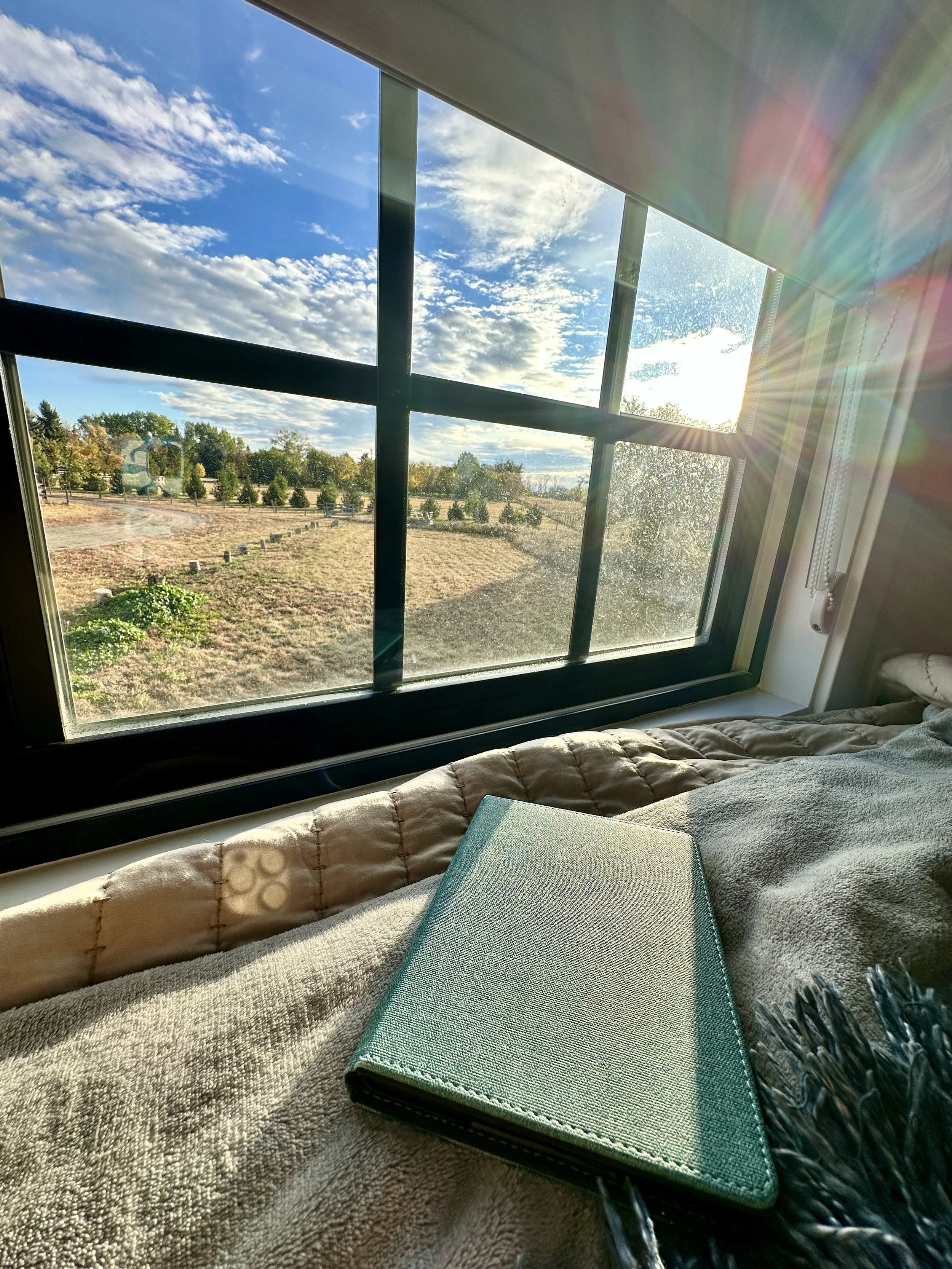
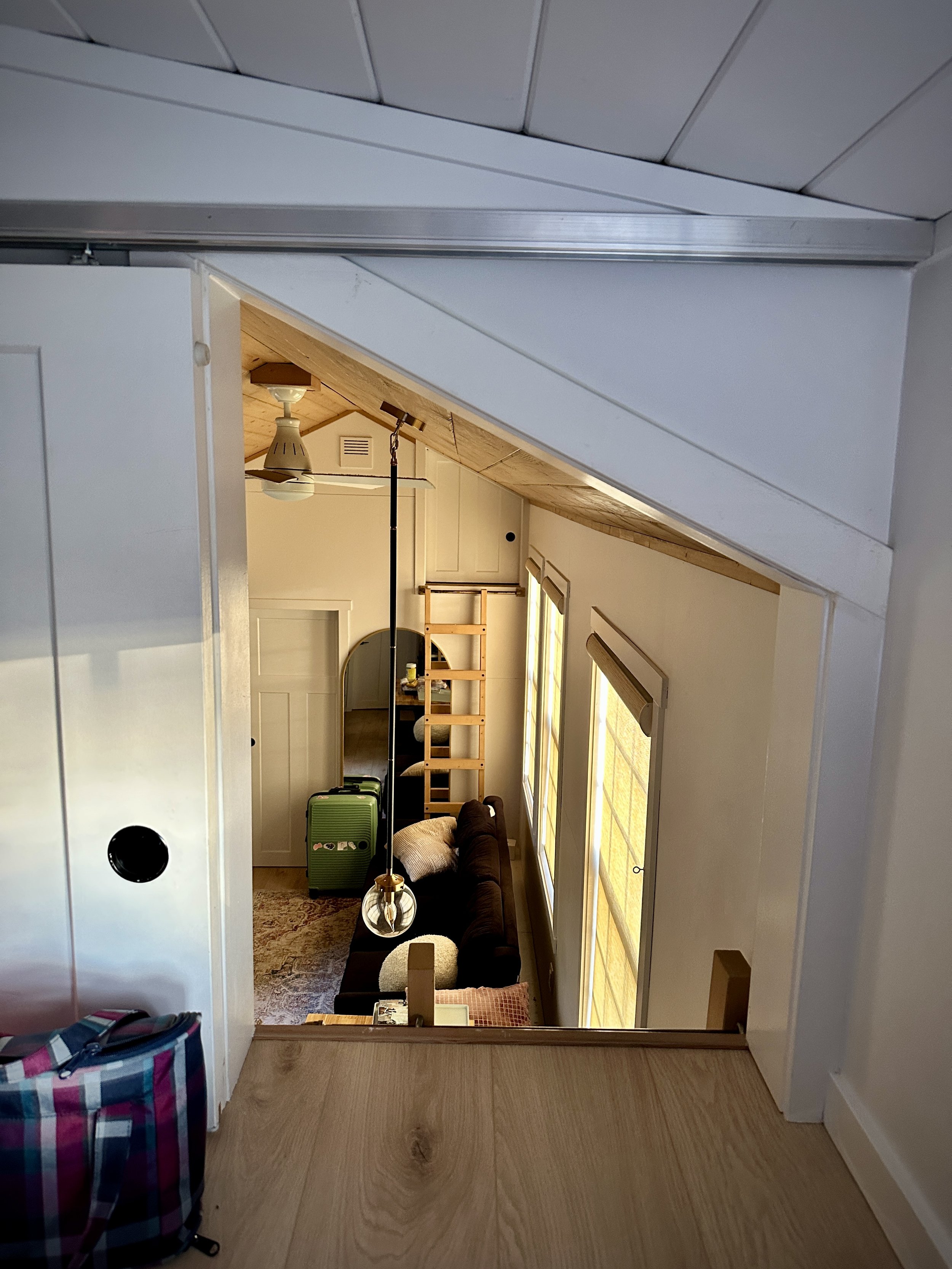
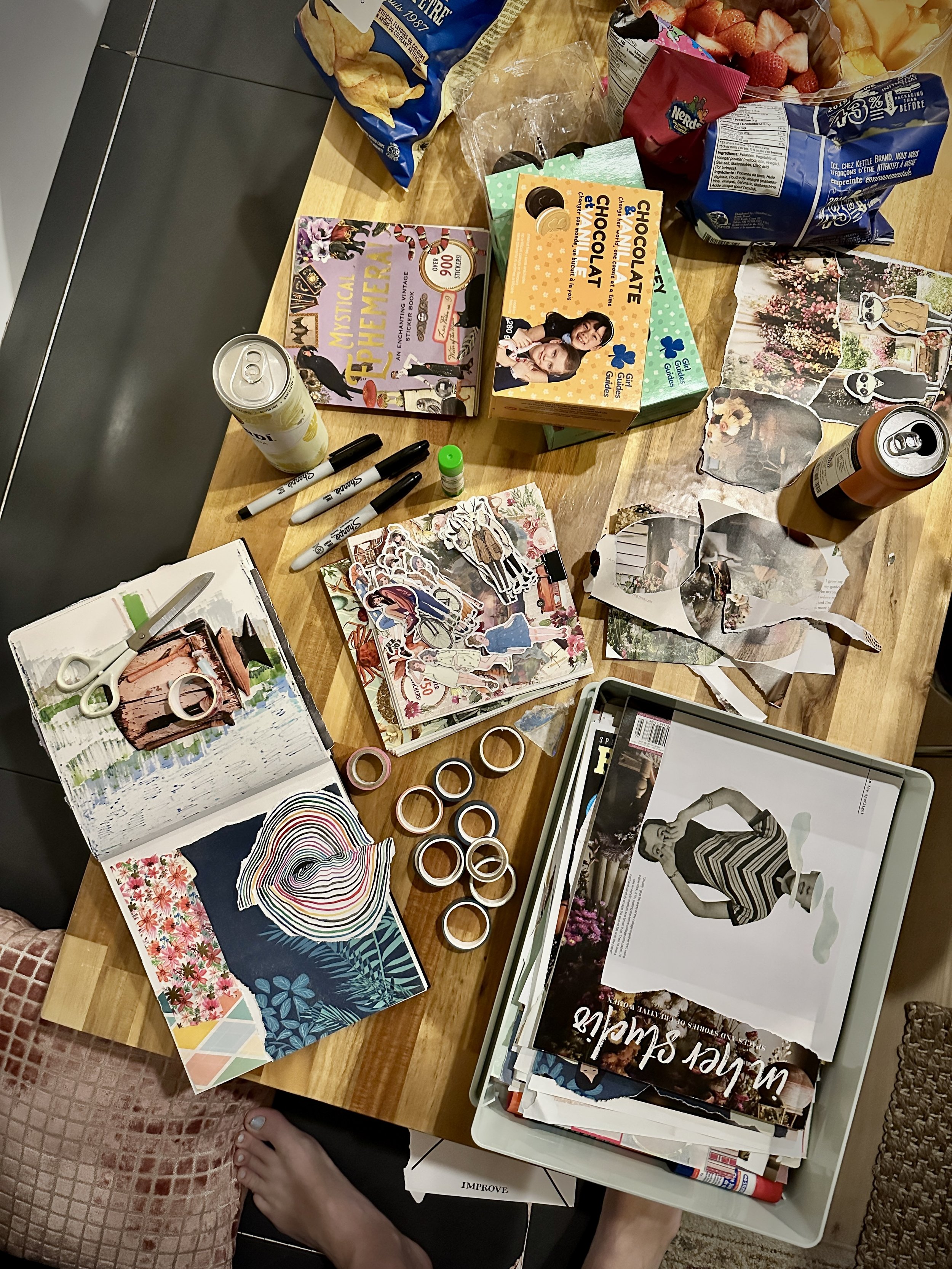

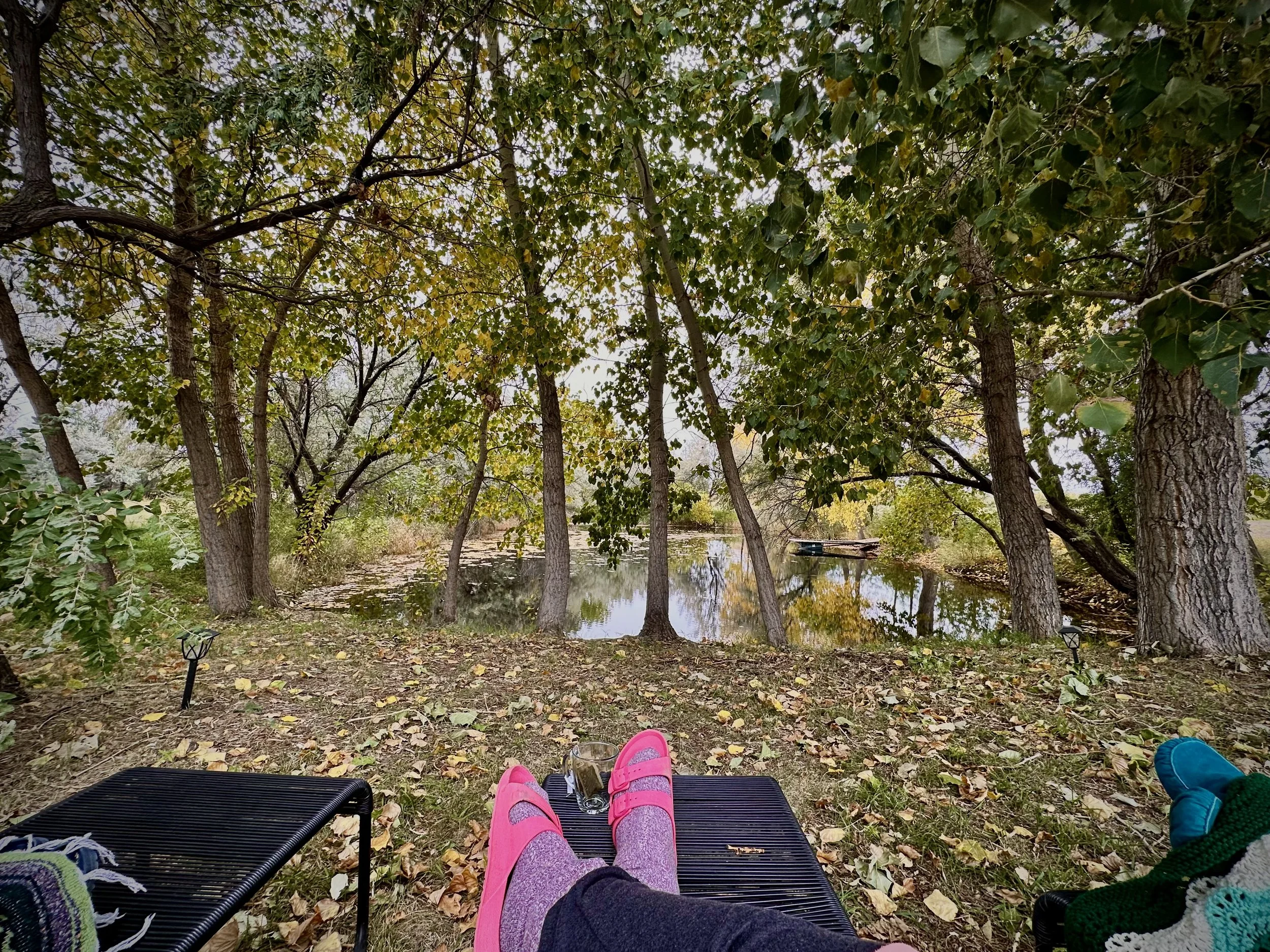
But this year? I didn't do that. I just... went. The guilt was still there. The worry was still there. But I went anyway.
And you know what happened? They were fine. More than fine. My partner figured it out. The kids survived. And I spent that weekend remembering who I was underneath all the caregiving and managing.
But here's what was interesting - even when I was there, my body kept bracing. Like I was waiting for a text saying someone needed me. Like I had to justify taking up this space that wasn't about serving someone else.
Does this sound familiar? That feeling when you finally get a moment to yourself, but you can't fully relax into it because part of you feels like you shouldn't be there? Like you're stealing time that belongs to someone else?
Today we're going to explore what it actually feels like in your body to claim space for yourself - and how to work with the guilt and resistance that might show up.
What I Hope You Discover Today
Maybe you can build tolerance for the discomfort of guilt without letting it stop you
Perhaps guilt and shame feel different in your body - and knowing the difference matters
Your body knows when taking space builds resilience versus when it depletes you
↓ WATCH THE RECORDING OR SCROLL DOWN TO READ ↓
Gentle Check-In
Before we go deeper, let's just notice what's happening in your body right now.
Write the beginnings of these sentences and finish them with your very first thought:
When I imagine taking time just for me....
I think I should...
I think I shouldn't...
I would like to...
I do not want to...
I feel...
Guided Visualization: From Guilt and Shame to Resilience
Before we start, write down what you hope to understand about how permission and guilt show up in your body.
↓ LISTEN OR READ THIS SCRIPT ↓
If you're willing, get comfortable and take a few breaths with me. Or soften your gaze if closing your eyes doesn't feel right.
Close your eyes and take some deep breaths. Notice your chest rising and falling. Keep breathing until you feel settled in your body.
Imagine guilt. Where does that live in your body? What color is it? What shape?
Now notice shame. Is that feeling in your chest, your throat, your stomach? This is shame. It's that sinking, heavy, stuck feeling that says "I'm bad for even wanting this." Just notice where shame lives in your body. What color or texture would it be? What shape?
Now think about a time you DID take space - maybe you went on that trip, or took that walk, or said no to something. This is resilience. Where does it live? What color is it? What shape?
Here's the important part: Think about a moment - even just a few seconds - during that time when you felt okay. Maybe you laughed with a friend, or felt the sun on your face, or took a deep breath and thought "I needed this." That's resilience. That's your body remembering it can handle uncomfortable feelings and still be okay. Where does THAT feeling live? What does resilience feel like in your body?
Now move your attention to your heart area. When you can feel your attention there, ask: "What does my body need me to know about shame versus guilt versus resilience?" Let whatever images or sensations come up.
Finally, imagine yourself taking that break you're craving - the girls trip, the weekend morning alone, whatever it is. Feel the shame that might come up. Then feel what it would be like to do it anyway. That's your resilience muscle getting stronger.
When you're ready, gently open your eyes.
This isn't about becoming selfish. It's about learning to recognize shame, tolerate guilt, and build resilience by doing what you need anyway.
A Different Way to Look at This
I want to offer you a different way to think about taking space for yourself - and drop a truth bomb about guilt versus shame.
Here's the difference: Guilt says "I did something wrong." Shame says "I AM something wrong."
When you feel guilty about taking time for yourself, your body is responding to breaking an invisible rule - maybe the rule that says "good moms are always available" (hidden message: "am I bad/wrong for needing space?") or "my needs don't matter as much as theirs." But that guilt? It's not actually guilt... it's shame. Guilt should in theory motivate you towards change - you notice something and want to change it.
Shame, on the other hand, keeps you stuck. It says "self-care is selfish and therefore I'm a bad mom" or "wanting space makes me selfish and broken."
Here's what happens: When you can recognize guilt as just discomfort about breaking old patterns - not truth about who you are - you can learn to tolerate it (and gain resilience in overcoming those thoughts - easier said than done, right?). You can feel guilty AND still claim the space you need. But shame will keep you from forward motion.
And here's where resilience comes in: Every time you feel the guilt, acknowledge it, and (try to) do the thing anyway, you're building resilience. You're teaching your nervous system that you can handle uncomfortable feelings without being destroyed by them. You're proving to yourself that guilt is just a feeling, not a fact.
Your body holds the wisdom about what you actually need. It knows when you're running on empty (you know the signs), when you need to recharge, when taking space will help you show up better for everyone.
What if building resilience isn't about never feeling guilty - it's about learning to act aligned with your needs even when guilt shows up?
Today we're going to explore what guilt, shame, and resilience actually feel like in your body - and how to tell the difference between them.
Creative Practice - Your Choice
Pick whatever feels most accessible to you today - based on what energy you have, what supplies are handy, or just what calls to you.
🎨 Option 1: Map Guilt, Shame, and Resilience
Divide your paper into three or four sections.
In one section, express what guilt feels like in your body when you think about taking space.
In another, express what shame feels like (the voice that says you're bad or broken for needing space).
In the third section, show what resilience looks like - what it feels like to do it anyway.
If you want a fourth section, add what confidence might feel like as you build this muscle.
🖊️ Option 2: Write About Guilt, Shame, and Doing It Anyway
Let yourself write about what came up during the meditation.
What does guilt feel like versus shame?
What barriers show up - both from yourself and from others?
What would it look like to acknowledge the guilt and do it anyway?
What builds your resilience?
Remember - this isn't about making guilt or shame disappear. It's about learning to recognize them and move forward anyway.
Take 12-15 minutes with whichever option you chose.
Journal Practice: What Did You Notice?
Take a moment to look at what you created, or think about what came up for you.
Could you feel the difference between shame and guilt in your body? Where did each one live?
What surprised you about what resilience actually feels like physically?
When you imagined doing it anyway, what happened in your body - did the shame get louder, or could you feel your resilience muscle flexing?
What I hear from people is how surprised they are that shame and guilt feel so different in their bodies - and that recognizing the difference helps them not get stuck. Shame keeps you paralyzed. Resilience helps you move forward even when it's uncomfortable.
What You Discovered Today
Look what you did today. Instead of just feeling guilty about wanting space, you explored the difference between guilt and shame - and discovered that guilt is just discomfort about breaking old patterns, not truth about who you are.
You learned that resilience isn't built by avoiding uncomfortable feelings, but by feeling them and doing what you need anyway. Every time you acknowledge the guilt and claim space for yourself, you're building that resilience muscle.
You explored what barriers show up - both from yourself (the internal voices and conditioning) and from others (their expectations and reactions). And you considered what it would look like to acknowledge those barriers without letting them stop you.
You discovered that your body knows the difference between guilt (discomfort about breaking rules) and shame (feeling fundamentally wrong). And that building tolerance for guilt is actually a form of self-respect.
Here's something to remember: Your family needs you to model what it looks like to have healthy boundaries and take care of yourself, even when it feels uncomfortable. They need to see that guilt doesn't have to control your choices.
What if claiming space for yourself - even when guilt shows up - is one of the most resilient things you can do? What if teaching yourself that you can handle uncomfortable feelings is the foundation for everything else?
Next Week: Session 7: Wait... Maybe I'm Better at This Than I Thought? - Finding Proof You're Not Failing Everything
Something to Take With You
Think about one small way you could claim space for yourself this week - something that feels both necessary and a little scary because it's just for you.
Write for a few minutes: "One way I could claim space for myself this week is..."
Maybe it's taking a bath without being interrupted. Maybe it's going for a walk alone. Maybe it's sitting outside for ten minutes with your coffee. Maybe it's saying no to something you don't actually want to do.
Now make it tangible with these accountability steps:
When specifically will you do this? Write down the day and time.
What support do you need? Who needs to know? What do you need to arrange?
What will you do when guilt shows up? Write one sentence you can say to yourself (like "I can feel guilty and still take care of myself").
Who will you tell about this commitment? Text one person right now and tell them what you're planning to do.
Start small, but start somewhere with a real plan. Trust what your body told you it needs.
Gentle questions to carry with you this week:
What would change if you treated guilt as information about old patterns, not truth about who you are?
How might building tolerance for guilt actually strengthen your resilience?
What's one way you could acknowledge barriers (from yourself and others) without letting them stop you?
These are just invitations. You get to decide what space looks like for you - and actually make it happen.
Session 7: Wait... Maybe I'm Better at This Than I Thought? - Finding Proof You're Not Failing
Welcome back, or welcome if this is your first time with us. However you made it here today - whether you're feeling proud of yourself or still convinced you're failing - you're exactly where you need to be.
Last week, my son came home upset from camp. Instead of rushing to fix things or honestly, embarrassingly, ignoring him because I was busy, I just sat with him. I listened and let him feel heard. I didn’t check my phone - I was fully there.
Later, while beating myself up for what I didn’t finish that day, I realized: I showed up for him exactly how he needed. That mattered.
I’ve been so focused on my mistakes - the yelling, shortcuts, exhaustion - that I forgot the times I’m actually being the mom my kids need.
Then I thought about my mom - not the tough parts I’ve worked through in therapy, but the good. How she made me feel okay about my quirks, sang with me in the car, and spent fun, spontaneous days together scrapbooking, puzzling, or road-tripping.
I'm doing some of that. I'm carrying forward the good parts. And I didn't even realize it.
Does this sound familiar? That moment when you suddenly notice you're not actually failing at everything? When you catch yourself doing something “right” and realize you've been so busy looking for evidence of failure that you've missed all the evidence of success?
Today we're going to intentionally look for that evidence - the proof that you're better at this than you thought. The strengths you've been overlooking. The good you're carrying forward from your own childhood.
What I Hope You Discover Today
Maybe you're carrying forward more good from your childhood than you realized
Perhaps there's evidence all around you that you're doing better than you think
Your body knows when you're showing up as the mom you want to be - you just haven't been paying attention
↓ WATCH THE RECORDING OR SCROLL DOWN TO READ ↓
Gentle Check-In
Before we go deeper, let's just notice what's happening in your body right now.
Think about one moment this week - just one - when you showed up for your kid(s) in a way that felt good. Maybe you were patient when you expected to be frustrated. Maybe you were present when you could have been distracted. Maybe you were kind to yourself when you could have been critical.
Complete these sentence stems:
One thing I did well as a mom this week was...
Something good I learned from my mother/caregiver that I'm carrying forward is...
When I think about looking for evidence that I'm doing okay, my body feels...
And when you think about intentionally looking for your strengths instead of your failures, what comes up? Maybe hope? Maybe resistance because you're so used to the criticism? All of that makes complete sense.
A Different Way to Look at This
Your brain has something called negativity bias - it's wired to notice and remember negative experiences more than positive ones. So every time you mess up, your brain files it away as evidence. But every time you get it right? You might dismiss it as "just doing what any mom would do" or "not good enough."
This is where self-validation becomes important. Instead of waiting for someone else to tell you you're doing okay - seeking reassurance from your partner, looking for proof in how your kids turn out, comparing yourself to other moms - what if you could validate your own experience?
What if you could say "I actually handled that well" or "That was hard AND I showed up anyway"?
Self-validation means recognizing your actual experience - including your strengths and moments of showing up well - as real and worthy of acknowledgment. Not dismissing them, not minimizing them, but actually seeing them.
Here's where the intergenerational piece comes in: When you think about your own mother or caregiver, what if you looked for what was GOOD about how you were raised? Not to erase the hard parts, but to recognize the strengths that were modeled for you - things that might actually be serving you well now.
Today we're going to explore what it feels like in your body when you're showing up well, practice validating your own strengths, and recognize the good you're already doing - because it's there, even if you haven't been noticing it.
Guided Visualization: Finding the Evidence
Safety note: This meditation invites you to reflect on positive memories - both from your childhood and from your current mothering. If thinking about childhood brings up difficult feelings, you can focus just on recent moments with your own kids.
Before we start, write down what you hope to discover about your strengths that you've been overlooking.
Musical Reflection: Take a few minutes to listen to "First Time on Earth" by Alex Warren and write freely about the good parts of how you were raised - what you want to carry forward. Let whatever wants to surface come through.
↓ LISTEN OR READ THIS SCRIPT ↓
If you're willing, get comfortable and take a few breaths with me. Or soften your gaze if closing your eyes doesn't feel right.
Close your eyes and take some deep breaths. Notice your chest rising and falling. Keep breathing until you feel settled in your body.
Think about your mother or whoever raised you - but this time, look for one specific good memory. Maybe a time she made you feel safe, or loved, or seen. Maybe something simple - the way she tucked you in, or made your favorite food, or celebrated something you did. Just one good moment. Notice what you see - the colors, the sounds, the feeling.
What was good about that moment? What did it give you? Maybe it was warmth, or security, or joy, or feeling valued. Just notice what you received from that moment.
Now notice: Are you giving that to your kids in any way? Maybe not exactly the same, but the essence of it. Are you creating moments of safety, or love, or celebration? Just look for the evidence. It's there - you've just been trained not to see it.
Now think about this past week with your own kids. Scan through the days and look for evidence - actual moments when you showed up well. Not perfectly, just WELL. Maybe you were patient during a meltdown. Maybe you listened when you could have dismissed. Maybe you played even though you were tired. Maybe you apologized when you got it wrong. Find at least three pieces of evidence.
For each piece of evidence, notice how it felt in your body when you showed up that way. What does being a good-enough mom feel like physically? Maybe grounded, or warm, or connected, or simply present. Notice the feeling.
Bring all this evidence into view. The good from your childhood that you're carrying forward. The moments this week when you showed up well. The proof that you're actually doing better than you think. Let yourself really see it.
Now move your attention to your heart area. When you can feel your attention there, ask: "What strength of mine have I been overlooking?" Let whatever comes up, come up. Maybe it's your patience, or your humor, or your ability to repair when you mess up, or your fierce protection of your kids' hearts.
Finally, imagine yourself moving through tomorrow actively looking for evidence that you're doing okay - noticing when you show up well, acknowledging your strengths, recognizing the good you're creating. What does THAT feel like in your body?
When you're ready, gently open your eyes.
Creative Practice - Your Choice
Pick whatever feels most accessible to you today - based on what energy you have, what supplies are handy, or just what calls to you.
🎨 Option 1: Draw/Sketch What You Discovered Capture what you found in the meditation. What do your strengths look like? What does showing up well feel like in your body? What's the thread between what you received and what you're giving?
Create a Memories Collage Use whatever materials you have to create a visual representation of the evidence that you're doing better than you think. Include good moments from your childhood, your current strengths, and specific examples from this week.
🖊️ Option 2: Write in Response to the Meditation
List or write freely about: What was good from your childhood that you're carrying forward. At least 5 specific moments from this week when you showed up well. Strengths you've been dismissing.
Remember - this isn't about making something beautiful or getting it right. It's about externalizing what your body showed you about these two versions of yourself and the gap between them.
Take 12-15 minutes with whichever option you chose.
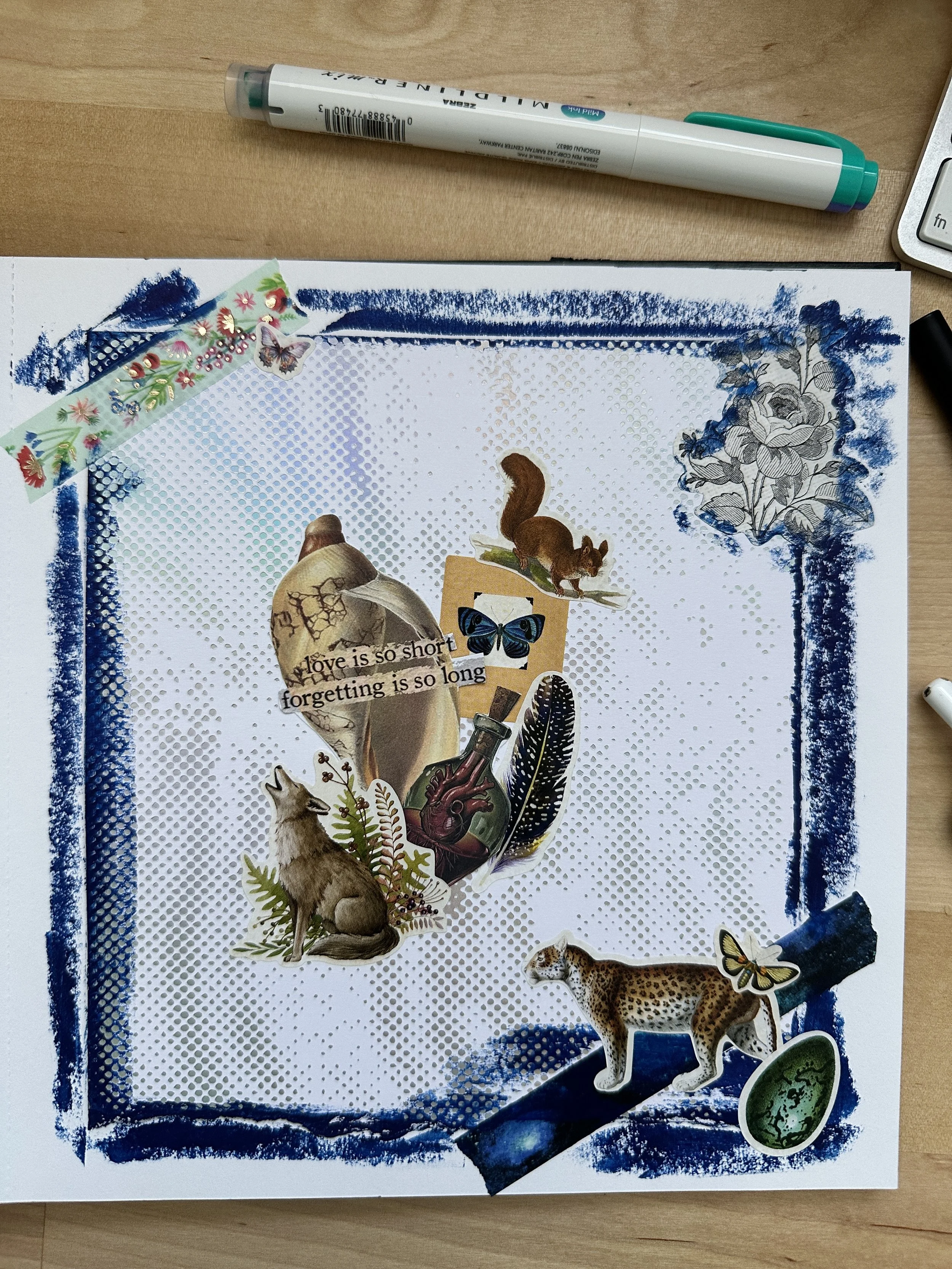
What I Discovered When I Did This Work
I created a collage that represents my family and how I felt when I unclenched my belly and allowed it to soften into the idea that I'm not failing.
Was it hard for me to find evidence? No. But it was challenging to believe it and hold onto it. I could feel my body letting go - a surrender, an appreciation for good that I've been overlooking.
This is the work. Not just finding the evidence - but letting your body actually receive it instead of dismissing it.
Journal Practice: What Did You Notice?
Take a moment to look at what you created, or think about what came up for you.
What surprised you about the good you found - either from your childhood or from this past week?
Was it hard to look for evidence of doing well? What resistance came up?
When you felt into moments of showing up well, what did that feel like in your body?
What I hear from people is how shocking it is to realize they're actually doing a lot of things well - but they've been so focused on failures that they haven't noticed. The evidence was always there. You just weren't looking for it.
What You Discovered Today
Look what you've done over these seven weeks. You've learned to trust your body's wisdom about overwhelm, criticism, sensory limits, identity, mental load, and guilt. Today you learned to use that body awareness to recognize when you're actually showing up well - because your body knows the difference.
You practiced looking for evidence of your strengths instead of only seeing your failures. You discovered that you're carrying forward good things from your own childhood - not just healing wounds, but continuing legacies of love and presence.
You learned that your brain's negativity bias has been working overtime, making you think you're failing at everything when the evidence shows something different. You're actually doing better than you think.
You practiced feeling in your body what it's like to show up well as a mom - and recognizing that feeling so you can notice it more often.
Here's something to remember: My 10-year-old watches me. He sees how I talk about myself. And if all he ever hears is me listing my failures - "I yelled again," "I'm so behind on everything," "I'm the worst" - what's he learning about how to treat himself?
But when I can say "You know what? I handled that meltdown really well today" or "I was so patient even though I was exhausted," he's learning something different. He's learning that people can mess up AND do things well. That you can acknowledge both without the self-flagellation.
Your kids are watching how you see yourself. Not what you tell them about themselves, but how you actually treat yourself when things are hard. What if acknowledging your strengths isn't selfish - it's modeling that they get to be whole, complex humans who are worthy even when they're not perfect?
What if you're already being a lot of what you hoped you'd be? What if the evidence has been there all along - you just needed to start looking for it?
You're not failing everything. You're actually doing a lot of things well. It's time you started noticing.
Next Week: Session 8: What If I Could Actually Handle This? - Making a Plan That Won't Crash and Burn
Create sustainable practices that work with your real life
Something to Take With You
This week, you're going to become an evidence collector. Not to prove anything to anyone else, but to train your brain to see the whole picture.
Daily practice: At the end of each day, write down at least three pieces of evidence that you showed up well as a mom. They can be tiny - "I didn't yell when I wanted to," "I made eye contact when they talked to me," "I apologized for being snappy."
Now make it tangible:
Where will you keep this evidence? (Notes app, journal, sticky notes on your mirror?) Decide now and set it up.
What time of day will you collect your evidence? (Before bed, during coffee the next morning?) Put it in your calendar.
Who will you share your evidence with? Find one person who will celebrate your wins without dismissing them as "not that big of a deal."
Also this week: Notice one thing you're doing as a mom that directly connects to something good from your childhood. Name it. Honor it. You're carrying forward good things, not just healing hard things.
Gentle questions to carry with you this week:
What would change if you looked for evidence of success as actively as you look for evidence of failure?
How might your kids benefit from seeing you acknowledge your own strengths?
What if you're already being a lot of what you hoped you'd be - you just haven't been noticing it?
This is the work of resilience - recognizing your actual strengths instead of just cataloging your failures.
Session 8: What If I Could Actually Handle This? - Making a Plan That Won't Crash and Burn
Welcome to our final session together. However you made it here today - whether you're feeling confident or terrified about doing this on your own - you're exactly where you need to be.
So a few winters ago, my partner went to his camp job but this time it was 21 days straight of being gone. Twenty-one days of solo parenting. And you know what's funny? A year before that, I would lose my absolute mind after just two night shifts alone with the kids. Two nights and I was convinced I couldn't do it, some nights calling him in tears, completely unraveling.
But this time? Twenty-one days. And I didn't just survive - I actually handled it. We had some rough moments and a routines. We had (mis)adventures. We had meltdowns (theirs and mine), but I had tools. I knew when my body was hitting its limit. I knew how to ask for help. I knew the difference between shame spiraling and just being tired.
I'm not saying it was easy. I'm saying it was possible.
And here's what I realized:
I didn't become a different person. I just started paying attention differently.
I learned to trust what my body was telling me instead of overriding it until I crashed.
I learned to validate my own experience instead of waiting for someone else to tell me I was doing okay.
I learned that I could feel guilty about taking breaks AND take them anyway.
That's what these eight weeks have been about. Not becoming perfect. Not fixing everything. Just learning to pay attention to your body's wisdom and trust that you can handle what comes up.
Today we're going to look at everything you've learned, meet a future version of yourself who's integrating all of this, and make a plan that won't crash and burn when life gets hard again.
What I Hope You Discover Today
Maybe you've built more resilience over these 8 weeks than you realized
Perhaps your future self already knows how to handle what's coming
Your body can guide you forward - not just in this program, but in real life
↓ WATCH THE RECORDING OR SCROLL DOWN TO READ ↓
Gentle Check-In
Before we go deeper, let's just notice what's happening in your body right now.
Think about where you were 8 weeks ago when you started this program. Now think about where you are today. What's different? What's shifted?
Complete these sentence stems:
Eight weeks ago, I was...
Now, I...
When I think about continuing this work on my own, I feel...
And when you think about actually being able to handle what comes next, what comes up? Maybe hope? Maybe doubt? Maybe both? All of that makes complete sense.
Looking Back: What You've Built Over 8 Weeks
Let's take a moment to acknowledge everything you've learned and practiced:
Session 1: You took stock of where you were - feeling into your overwhelm instead of just pushing through it
Session 2: You met your inner critic with curiosity instead of just believing everything it said
Session 3: You learned to honor your sensory limits - that "touched out" feeling is real information, not a character flaw
Session 4: You reconnected with your identity beyond motherhood - remembering you're a whole person, not just a caregiver
Session 5: You questioned the mental load - discovering what you're carrying out of love versus what's just habit
Session 6: You learned to tolerate guilt and take space anyway - building your resilience muscle
Session 7: You found evidence of your strengths - recognizing you're doing better than you thought
And now, Session 8: You're making a plan to keep going
That's not nothing. That's eight weeks of learning to trust your body's wisdom instead of overriding it until you break. That's powerful work.
A Different Way to Look at This
I want to offer you a different way to think about moving forward after this program.
What if you don't need to have it all figured out? What if sustainable change isn't about being perfect at these new skills, but about having a plan for when you backslide?
Because here's the truth: You're going to forget these tools sometimes. You're going to override your body's signals and push through until you crash. You're going to fall back into old patterns. That's not failure - that's being human.
The question isn't "How do I never mess up again?" The question is "What do I do when I inevitably fall back into old patterns?"
Your body will keep giving you information. The work is learning to listen again when you've stopped listening, and again, and again. It's not one-and-done. It's a practice.
Today we're going to meet a future version of yourself who knows how to do this - who has integrated these tools into real life, who stumbles and gets back up, who trusts their body's wisdom even when it's hard.
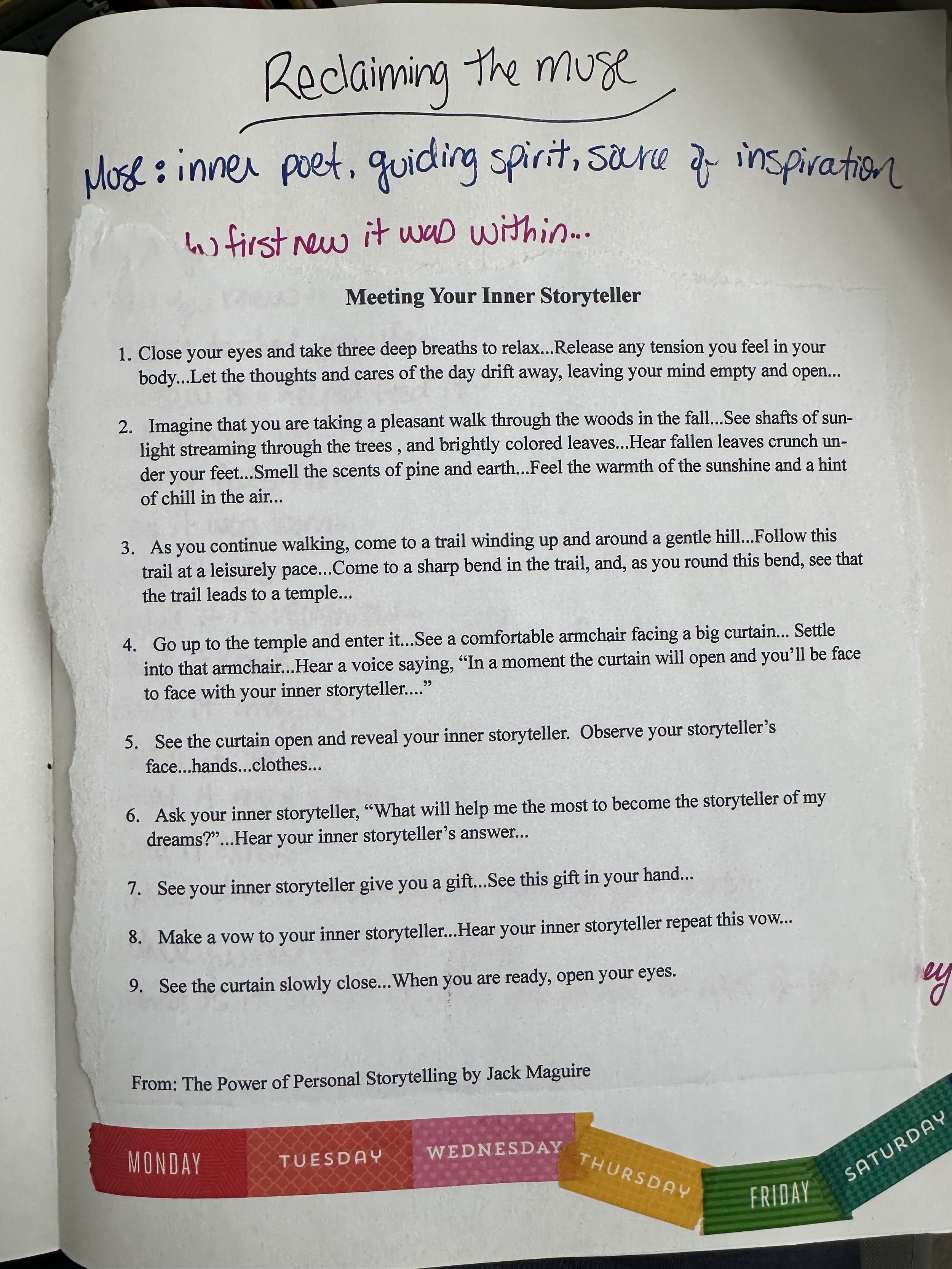
Guided Visualization: Reclaiming Resilience
Before we start, write down what you hope to hear from your future self about handling what comes next.
↓ LISTEN OR READ THIS SCRIPT ↓
Creative Practice - Your Choice
Pick whatever feels most accessible today:
Option 1: Draw Your Future Self
Capture what you saw in the meditation. What did your future self look like? What was the gift they gave you? What does it look like to be someone who trusts their body's wisdom in daily life?
Option 2: Create Your "Plan That Won't Crash and Burn"
Make a visual or written plan that includes: One tool from each session you want to keep using. What you'll do when you backslide. Who will support you. How you'll know when you need help.
Option 3: Write What Your Future Self Told You
Capture the conversation from the meditation. What wisdom did they share? What did they tell you about handling hard things? What was the vow you made?
Remember - this is about sustainable integration, not perfection.
Take 12-15 minutes with whichever option you chose.
Journal Practice: What Did You Notice?
Take a moment to look at what you created, or think about what came up for you.
What surprised you about your future self?
What wisdom did they offer about keeping this work alive?
When you think about actually doing this in real life, what feels most important to remember?
What I hear from people is how much their future self already knows - that the wisdom is already there, they just need to keep accessing it.
Eight weeks ago, maybe you were drowning in overwhelm, disconnected from your body, overriding every signal until you crashed.
Today? You have tools. You have awareness. You have proof that you're not failing at everything.
You've learned that your body holds wisdom - about your limits, your needs, your strengths, your truth. You've practiced listening to those signals instead of just powering through.
You've learned that:
Overwhelm is information, not failure
Your inner critic is worried, not mean
Sensory limits are real and deserve respect
You're still a whole person beyond motherhood
You don't have to carry everything
Guilt doesn't have to stop you
You're doing better than you think
You can actually handle this
You've built something over these 8 weeks. Not perfection. Not a complete overhaul. Just a practice of paying attention to what your body already knows.
What if the most important thing you've done these 8 weeks isn't learning all these tools - it's showing your kids that their mom is a whole person who deserves care and attention too?
You started this program because something wasn't working.
Maybe you were burned out, touched out, overwhelmed, or just tired of feeling like you were failing at everything.
Eight weeks later, you're not suddenly perfect. You're not fixed. But you have something you didn't have before: a way to listen to your body's wisdom and trust that you can handle what comes up.
Two night shifts used to break me. Twenty-one days solo was hard, but I handled it. Not because I became superhuman, but because I started paying attention differently.
You can do this. Not perfectly. Not without stumbling. But you can do it.
The work doesn't end here. It's just beginning. Your body will keep teaching you. Keep listening.
Thank you for showing up for these 8 weeks. For being brave enough to look honestly at where you are. For practicing new ways of being. For trusting the process even when it was uncomfortable.
Your body knows what it needs. You've learned to listen. Keep going.
Homework - Your "Won't Crash and Burn" Plan
This isn't really homework - it's your roadmap forward. Answer these questions honestly:
1. What's one body signal I'm committed to not ignoring anymore? (Like that first twinge of sensory overwhelm, or the tightness in my chest when I'm about to say yes but mean no)
2. What's my "backslide plan"? When I fall back into old patterns (ignoring my body, toxic productivity, shame spiraling), what will I do? Be specific. (Example: "I'll reread Session X, call my friend Sarah, take a 5-minute body scan")
3. Who are my people? List 2-3 people who will support this work, who understand what you're trying to do, who will remind you when you forget.
4. What's my sustainability practice? How will you keep body wisdom alive? Daily check-ins? Weekly creative practice? Monthly review? Make it small and realistic.
5. What will my future self thank me for? What's one thing you could start doing now that your future self will be grateful for?
Write these down somewhere you can access them. Put them in your phone, on your mirror, in a journal you actually use.
Gentle reminders to carry forward:
You don't have to be perfect at this. You just have to keep practicing.
Your body will keep giving you information. The work is learning to listen again when you've stopped.
Backsliding isn't failure. It's part of the process.
You can handle more than you think - and you don't have to handle it alone.