Am I the Problem? The One Question That stops the mental load fight for Moms
A tool for moms who are stuck in the mental load conversation loop and want to know how to change it for good.

If you and your partner keep having the same fight - about the dishes, the forms, the appointments, the fact that you are tracking seventeen things at once and he seems to be tracking none - this blog post is for you.
I found this tool (the one I’m about to explain if you keep scrolling) in Impossible Parenting, Olivia Scobie - author, therapist, researcher, and co-founder of the Canadian Perinatal Mental Health Trainings.
I read the whole thing in three nights, and have since committed it to memory and have used it with mom clients, with my own kids, my own gnarly blame self-talk and on the podcast.
It is so simple it almost seems like it’s too good to be true, but first…
Why Moms Keep Having the Same Fight about the mental load
When moms come to counselling with me feeling stuck in the mental load, the conversation usually ends in the same place: he is the problem (and they aren’t wrong… so to speak).
It’s rarely that simple.
Mental load is invisible labour: conceptualizing, planning, remembering, coordinating, executing and the emotional housekeeping. It creeps into the corners of life and becomes a default role people (women) fall into - often unconsciously. When you’re the one keeping all the tabs open, it makes sense to point toward the person who’s not carrying their fair share.
It’s obvious, invisible, and infuriating and if you need some back up on this The Fair Play spreadsheet doesn't lie.
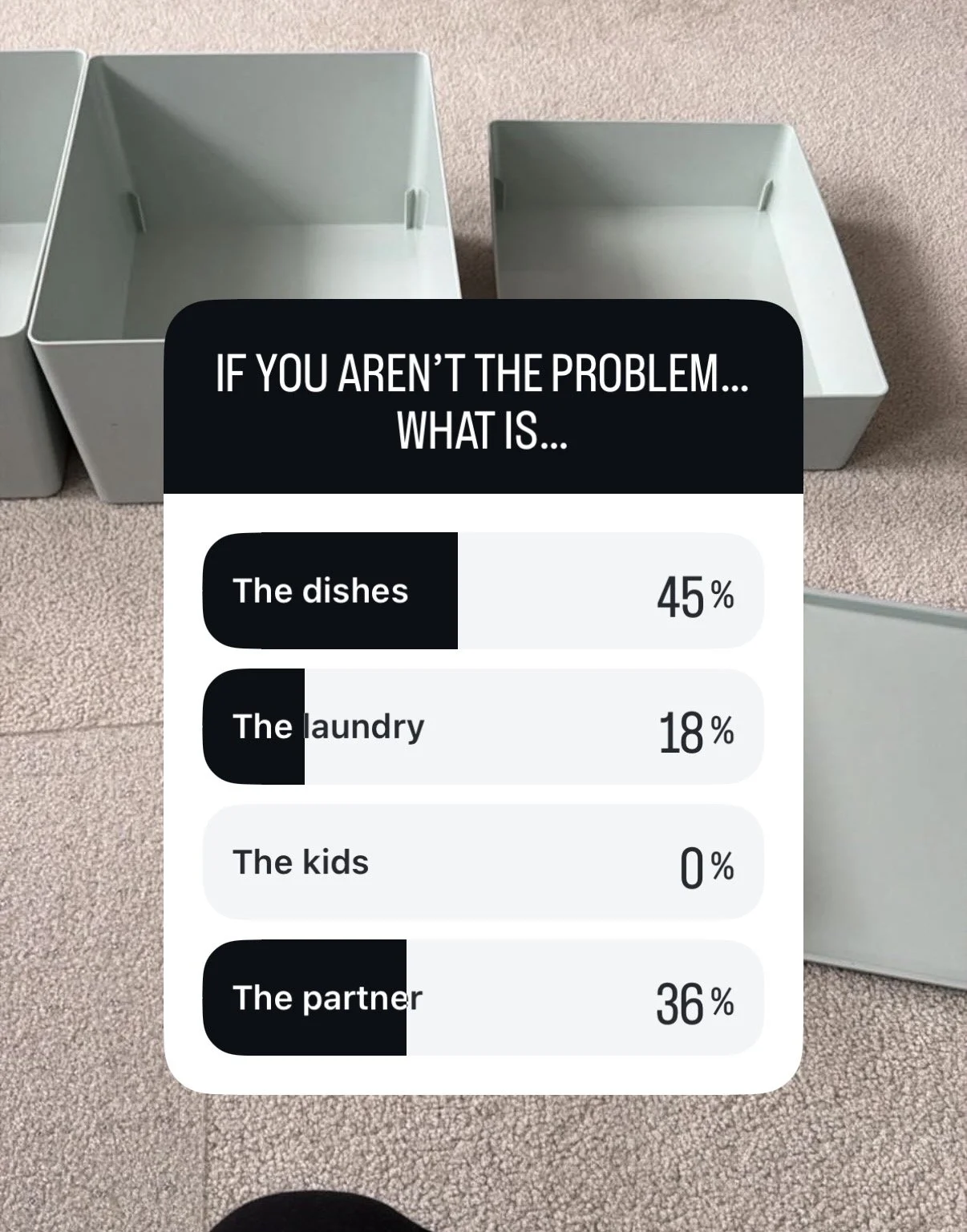
So, the point that you probably already know is… She (the client I was talking about) is doing 90% and he is doing 10% and she is exhausted and furious about it. Confirming that feels satisfying for about five minutes. Validating, even. Yes, you are right, this is unfair, and there is data to back it up.
So, her and I, we discuss possible solutions, role play the conversation and then she shows up the following week in exactly the same place, still furious, still exhausted, still waiting for something to change.
When she comes back with the same defeat in her eyes and the story of the defensiveness her partner showed her, I sitting across from her, I want to do all of it at once:
Show up at her house.
Give her partner a tearing down.
Ask about her mom and emotional patterns she saw growing up and excavate the whole thing back three generations.
I want her to try harder (because there is such freedom on the other side) while knowing full well she cannot possibly try any harder.
AND I am thinking: she does not deserve this, what the actual f*ck, and how are we going to get anywhere in an hour.
But that doesn’t really help today, right now.
The Question Moms Need to be asking When they keep Fighting about the mental load (and nothing has changed… yet)
In the book Olivia describes a technique she uses with couples caught in a blame loop. She asks them to imagine for a moment that:
If I'm not the problem… and you're not the problem… what is the problem?
Then she writes the answer on a piece of paper and puts it on the table between them - a third thing in the room that both people can look at instead of something either person has to defend against.
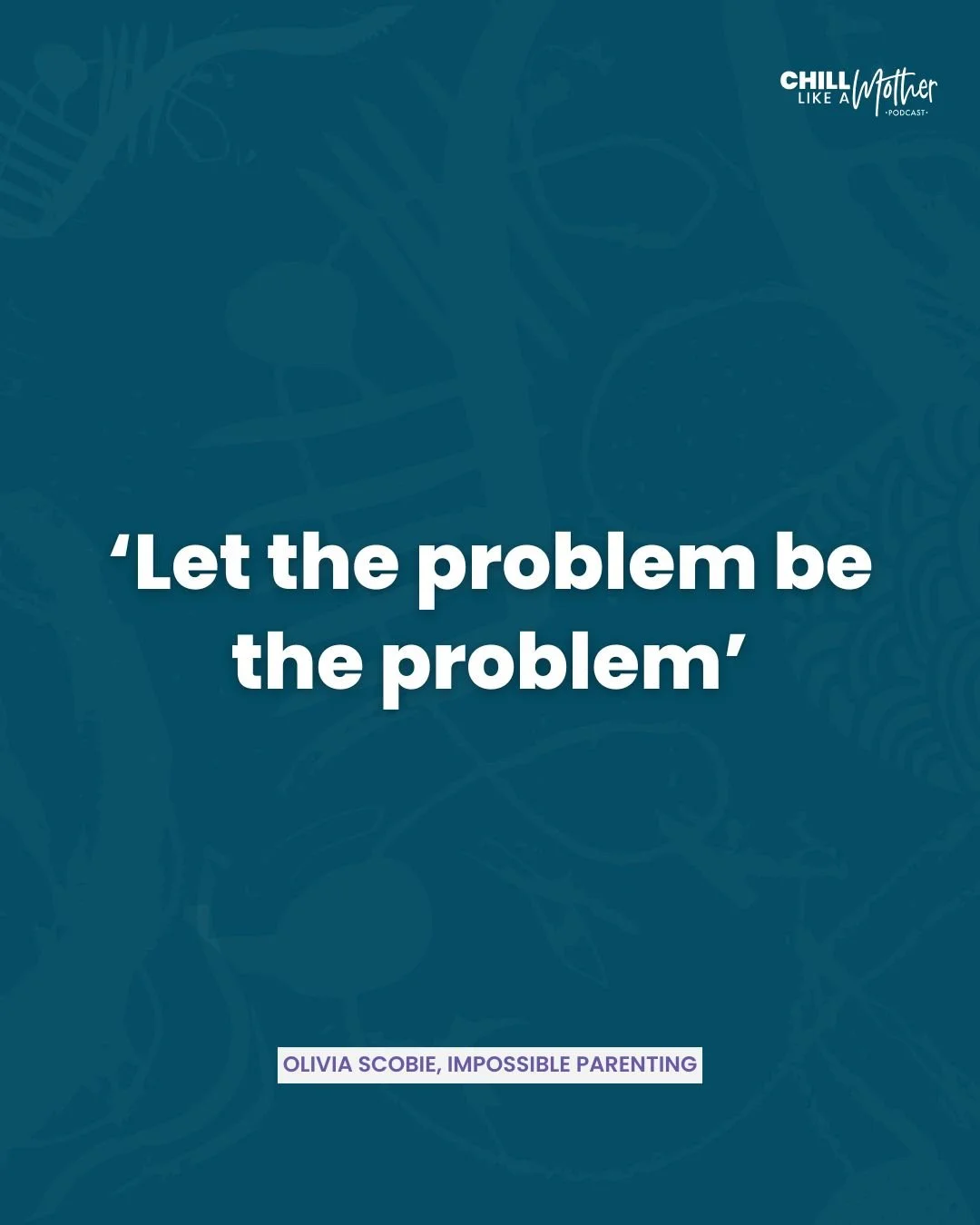
The actual mental load problem might be:
communication styles
differing opinions on expectations
that nobody ever had an explicit conversation about who was carrying what before the kids arrived.
that one person grew up in a house where this was just what moms did and it has never once been questioned.
that she just does everything because it was faster, and now there is genuinely no room for him to step in even when he wants to.
How Moms Can Use This Tool on Their Own
Three steps to changing how you feel about the mental load:
Name the feeling, not the story.
Ask the question - if I'm not the problem and they're not the problem, what is the problem?
Write down what you think the answer is.
I was mid-yell during the after school backpack drop-off.
That window right after pickup where everyone is starving and overstimulated and I am holding seventeen things in my head and someone is already crying about a snack. I caught myself about to unload all of it on my kids - who had done nothing except exist loudly - and I stopped.
If I'm not the problem and they're not the problem, what is the problem?
The problem was that I was too depleted to think straight and I was about to take it out on the wrong people.
So I sat down. Ate a snack and quit trying to control all of it.
Where Moms Can Go When a Blog Post about the mental load Isn't Enough
Olivia Scobie's book Impossible Parenting is worth reading cover to cover if you are a mom who is tired of being handed solutions that don't account for the impossible standard you're being held to.
We also did three episodes together on Chill Like a Mother - Episodes 26, 27, and 28 - if you want to hear Olivia in her own words.

If you're ready to actually talk to someone, I'm a mom guilt therapist and registered social worker trained in expressive arts therapy.
I work with mothers in Alberta, Saskatchewan, and Ontario and you can book a free 20-minute consult with me.
If you're outside those provinces, the Canadian Perinatal Mental Health Trainings provider directory is one of the best places in Canada to find a practitioner who specializes in maternal mental health.
If you put the actual problem on the table - not the dishes, not who does more, the thing underneath all of it - what do you think it would be? Drop it in the comments.